
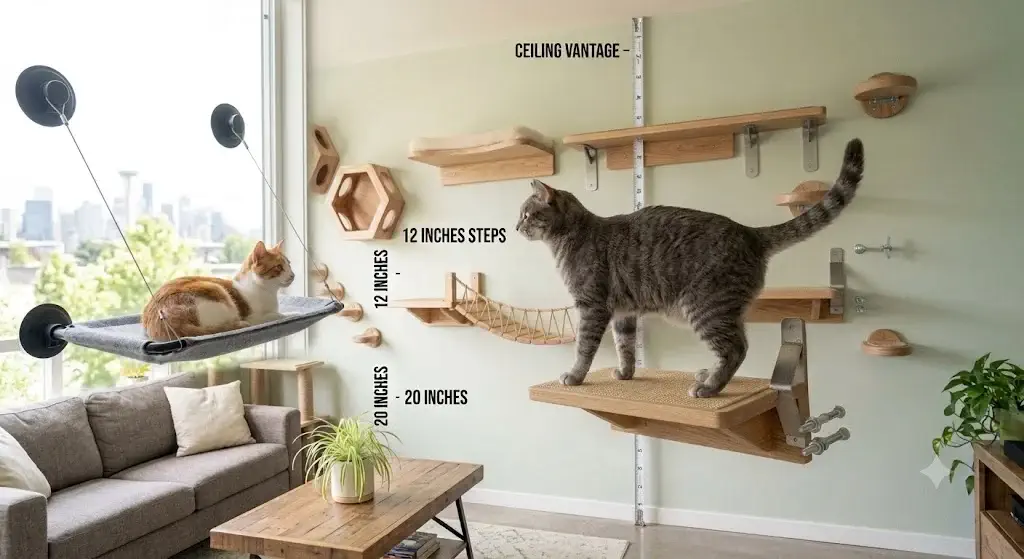
VACUUM SEAL KINEMATICS • CANTILEVER SHEAR MECHANICS • RENTAL STRUCTURAL COMPLIANCE Cat Window Perch vs Wall Shelf: Ultimate Comparison Guide Cat wall shelves deliver permanent structural stability through timber stud anchors, while window perches provide zero-drill visual stimulation via atmospheric suction cups. Deciding between a cat window perch and a wall-mounted cat shelf depends on […]
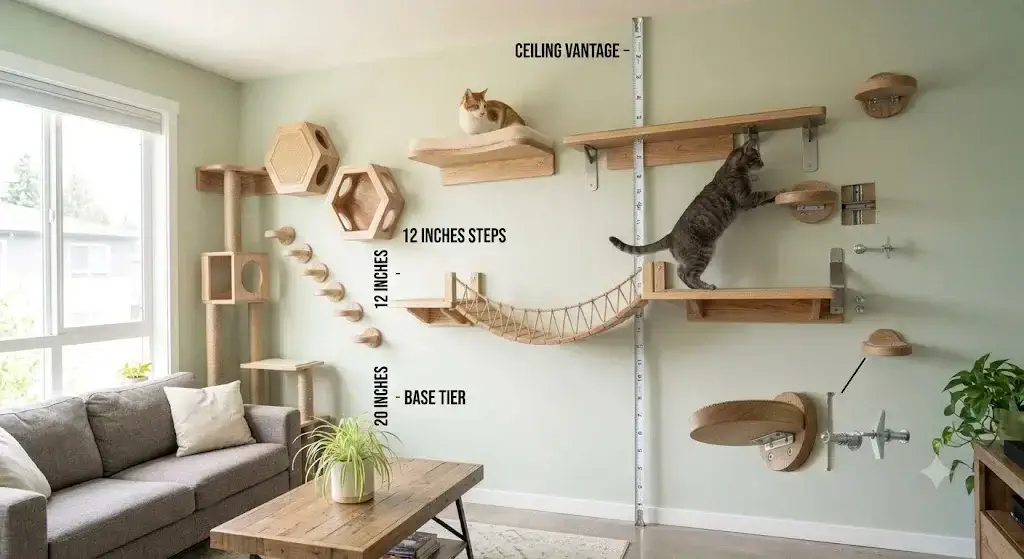
FELINE BEHAVIORAL ONBOARDING • PHEROMONE HABITUATION • SYSTEMATIC DESENSITIZATION How to Train a Cat to Use Wall Shelves: Step-by-Step Acclimation Training a cat to use wall shelves relies on progressive food-lure desensitization, facial scent transfer, and positive reinforcement to build vertical climbing confidence. While natural feline instincts favor high perches, unfamiliar shelf materials, sudden visual […]
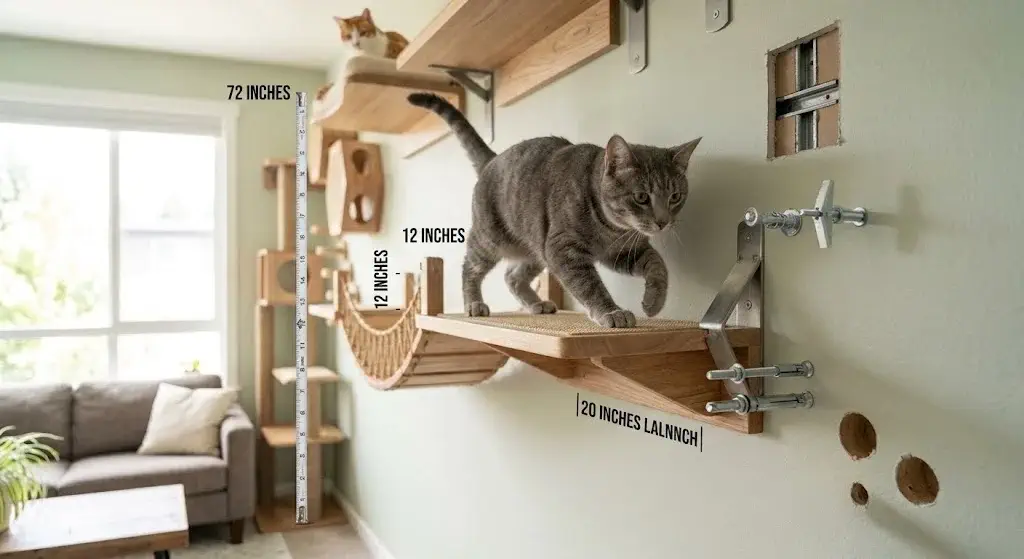
VERTICAL ELEVATION BIOMECHANICS • STRATUM CLEARANCE RATIOS • CARPAL DECELERATION KINEMATICS How High Should Cat Wall Shelves Be? Optimal Elevation Guide Cat wall shelves should be installed between 5.5 and 7.0 feet above finished floor level for top vantage points, while intermediate steps maintain 10 to 14 inches of vertical rise. Determining how high cat […]
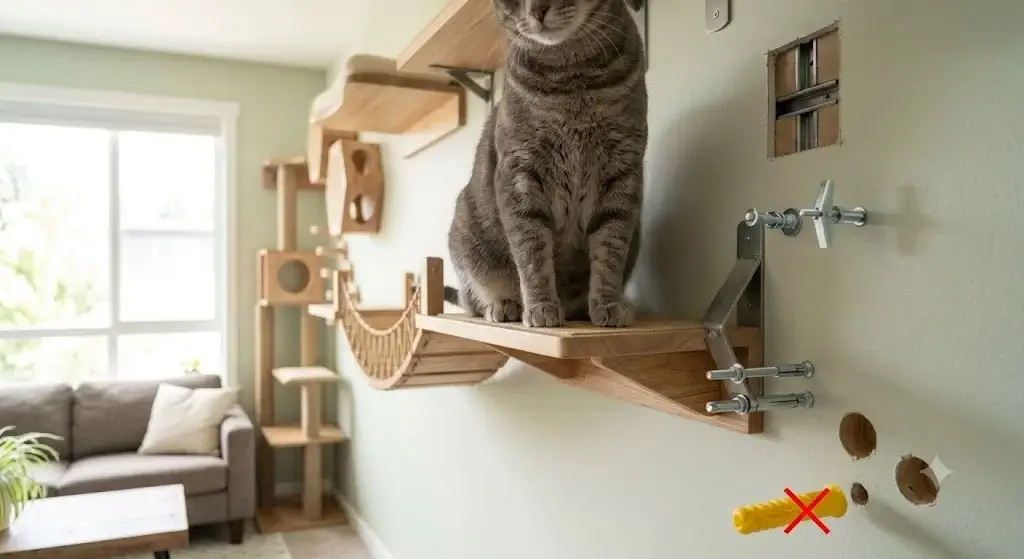
HOLLOW DRYWALL KINEMATICS • DYNAMIC SHEAR MARGINS • FASTENER PULLOUT RESISTANCE Cat Wall Shelves Without Studs: Hollow Drywall Anchor Guide Installing cat wall shelves without studs requires heavy-duty steel toggle anchors or architectural ledger backboards to prevent catastrophic drywall blowouts. While standard plastic drywall plugs hold static picture frames, a 12-pound feline launching downward exerts […]
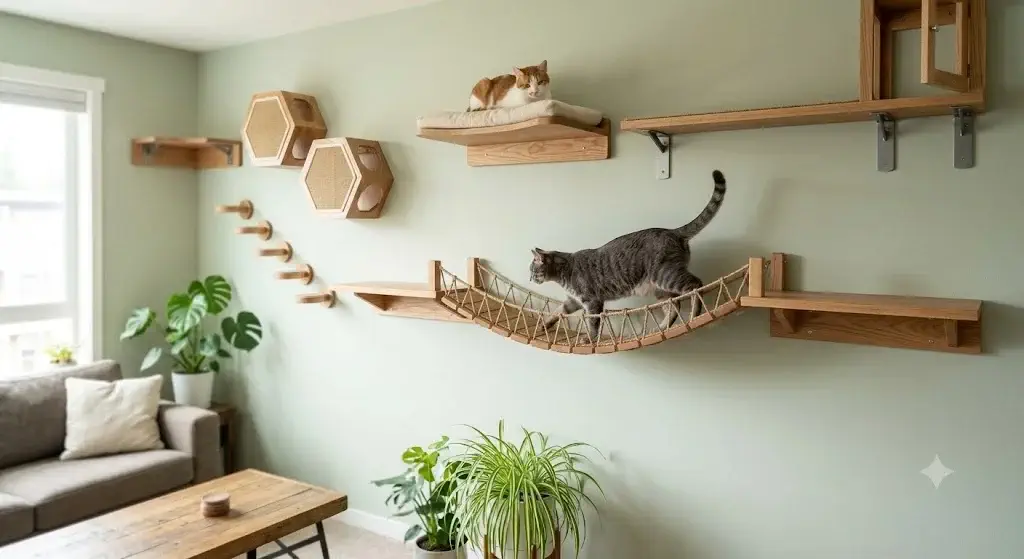
FELINE HIGHWAY KINEMATICS • 3D TERRITORIAL ZONING • CONTINUOUS CORRIDOR ENGINEERING How to Create a Cat Wall Highway: Continuous Overhead Layouts A cat wall highway connects vertical climbing shelves, horizontal bridges, and resting perches into an uninterrupted elevated transit circuit across residential living spaces. Unlike isolated perches that create dangerous dead-end bottlenecks, a properly engineered […]
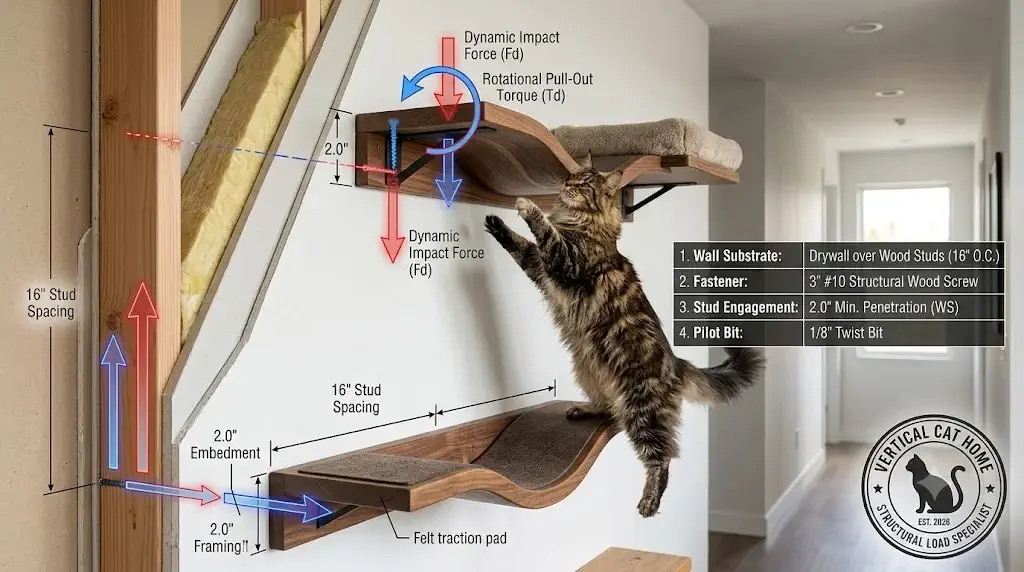
BIOMECHANICAL STRIDE GEOMETRY • VERTICAL RISE METRICS • FELINE DECELERATION CLEARANCE How Far Apart Should Cat Wall Shelves Be? Optimal Vertical and Horizontal Spacing Guide Cat wall shelves require 12 to 18 inches of vertical spacing for healthy adult cats, while kittens, seniors, and large breeds require reduced intervals of 8 to 12 inches to […]
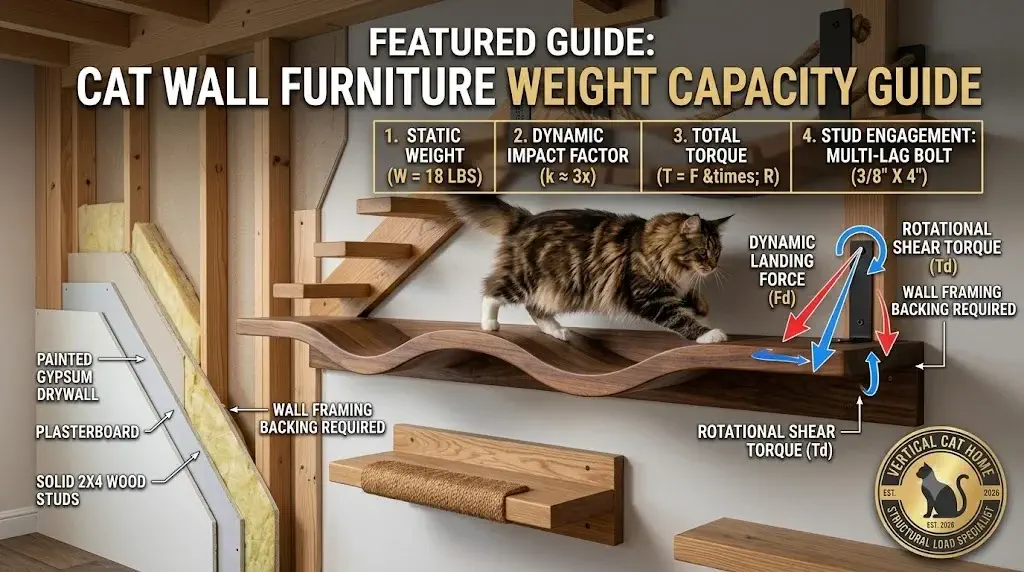
STRUCTURAL LOAD ARCHITECTURE • DYNAMIC FORCE TOLERANCE • LOAD-PATH INTEGRITY Cat Wall Furniture Weight Capacity Guide: Ratings, Dynamic Loading, and Safe Installation Cat wall furniture weight capacities range from 30 pounds on lightweight shelves to over 85 pounds on modular stud-anchored systems. A published weight rating represents an isolated benchmark that relies entirely on structural […]
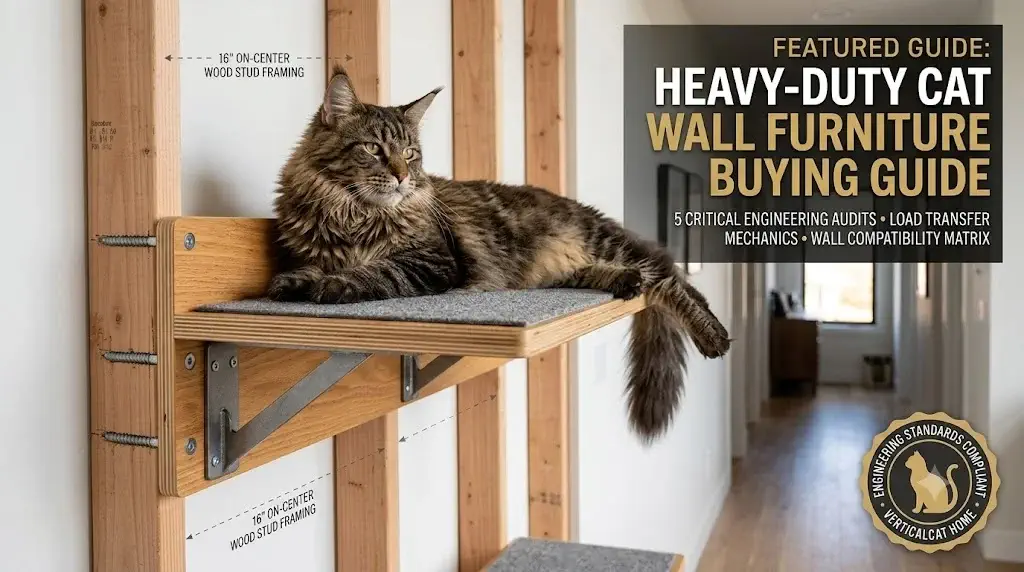
STRUCTURAL LOAD ARCHITECTURE • DYNAMIC SHEAR DYNAMICS • ASTM F2057 COMPLIANCE Heavy-Duty Cat Wall Furniture Buying Guide (2026 Engineering Standards) Heavy-duty cat wall furniture should be evaluated as a complete load-bearing system, not by the advertised weight rating alone. A strong platform can still be a poor choice if its brackets, fasteners, wall connection, usable […]
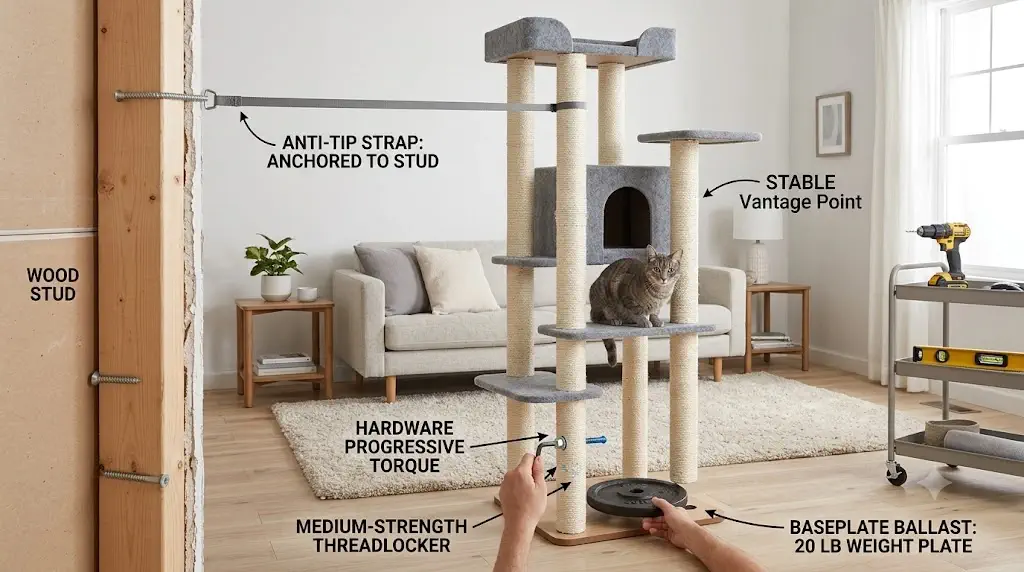
STRUCTURAL STABILIZATION PROTOCOL • ANTI-TIP RETROFITTING • ROTATIONAL TORQUE AUDIT How to Stop a Tall Cat Tree from Wobbling: Anti-Tip Guide (2026) Learning how to stop a tall cat tree from wobbling requires neutralizing lateral overturning moments through baseplate ballast addition, hardware re-torquing, and mechanical stud anchoring. Multi-tier cat towers exceeding five feet in elevation […]
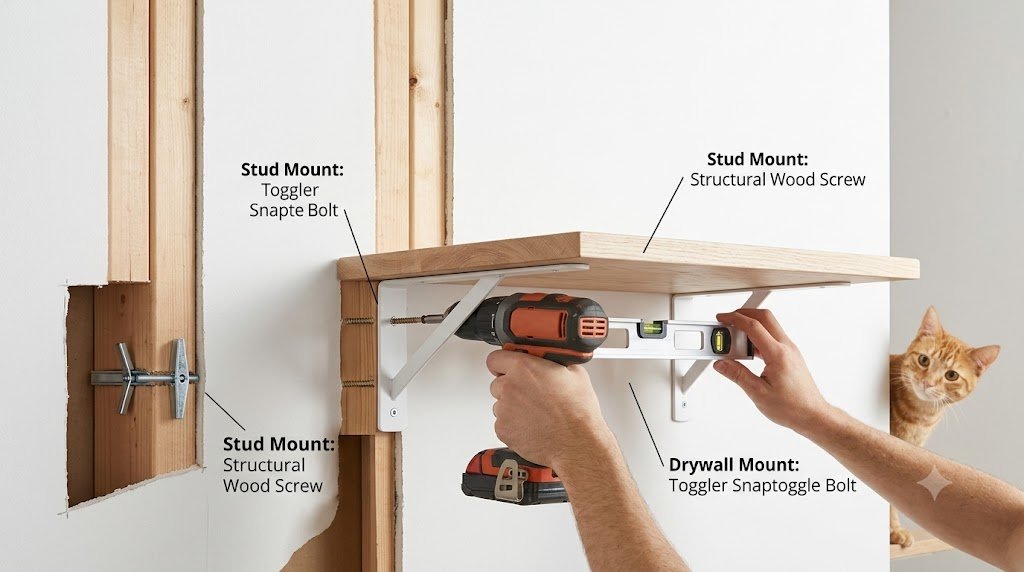
STRUCTURAL WALL INSTALLATION • STUD VS DRYWALL PROTOCOL • DYNAMIC IMPACT LOAD How to Install Cat Wall Shelves into Drywall and Studs (2026) Learning how to install cat wall shelves into drywall and studs requires calculating dynamic landing force multipliers and selecting appropriate fastener hardware to prevent catastrophic wall tear-out. When an active adult feline […]
- 1
- 2