
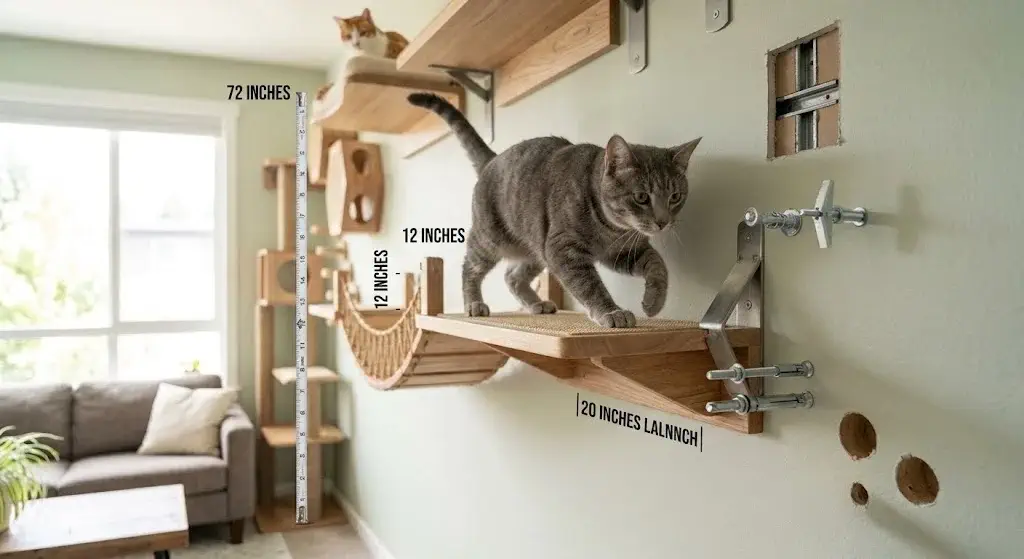
How High Should Cat Wall Shelves Be? Optimal Elevation Guide
Cat wall shelves should be installed between 5.5 and 7.0 feet above finished floor level for top vantage points, while intermediate steps maintain 10 to 14 inches of vertical rise. Determining how high cat wall shelves should be requires balancing predatory sightline elevation against orthopedic landing safety. Mounting high observation perches 18 to 24 inches below an 8-foot ceiling provides felines with complete territorial command without risking head collisions or forcing vertical downward leaps that exceed feline joint deceleration thresholds.
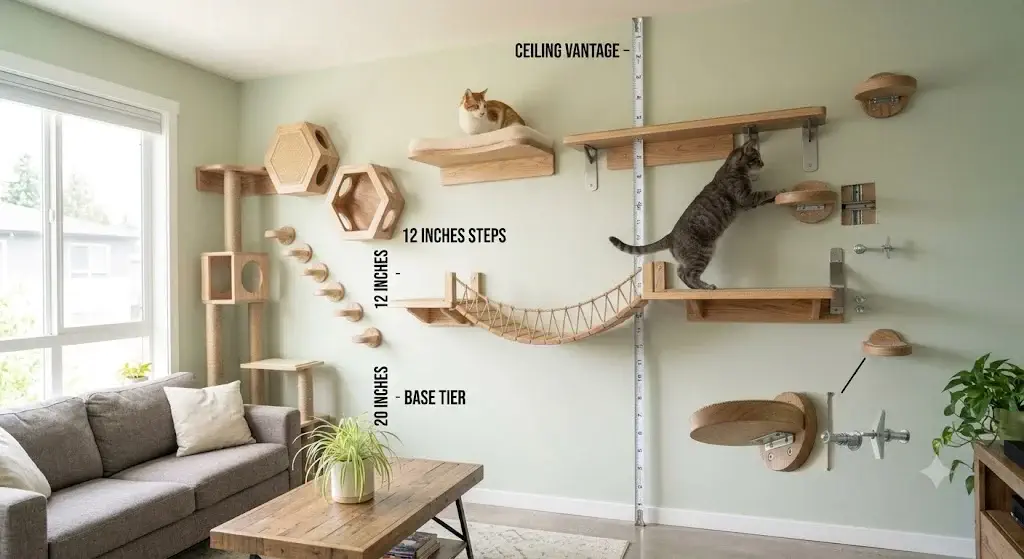
Quick Reference Specification: Cat Shelf Installation Heights & Spacing Metrics
| Shelf Elevation Tier | Target Height (From Floor) | Vertical Step Rise | Ceiling Headroom Gap | Target Feline Profile |
|---|---|---|---|---|
| Lowest Launch Shelf (Base Tier) | 18 to 24 Inches (45–60 cm) | Floor to Step: 18″ Max | Open (Lower Wall Zone) | Kittens, senior felines, and initial on-ramp |
| Intermediate Highway Steps | 30 to 60 Inches (76–152 cm) | 10 to 14 Inches (25–35 cm) | Minimum 16″ between tiers | Active adult cats navigating transit corridors |
| High Observation Penthouse | 66 to 84 Inches (168–213 cm) | Final Step Up: 12″ | 18 to 24 Inches (45–60 cm) | Confident adult felines surveying territory |
| Senior / Arthritic Cat Setup | 12 to 48 Inches (30–122 cm) | 6 to 8 Inches (15–20 cm) | Unrestricted / Low Altitude | Cats over 8 years with degenerative joint disease |
| Large Breeds (Maine Coon) | 24 to 72 Inches (60–183 cm) | 8 to 10 Inches (20–25 cm) | Minimum 22″ (Upright Posture) | Heavy felines (16–25 lbs) needing gentle inclines |
Quick Answer: How High Should Cat Wall Shelves Be Installed?
Cat wall shelves should reach a maximum peak height of 5.5 to 7.0 feet (66 to 84 inches) from the floor while leaving at least 18 to 24 inches of clearance beneath the ceiling. In standard 8-foot ceiling rooms, start your lowest launching shelf 18 to 24 inches off the carpet, space each ascending climbing step 10 to 14 inches apart vertically, and position your final resting perch at 72 inches. This vertical configuration satisfies natural feline predatory climbing instincts without forcing dangerous downward drops that risk carpal hyperextension or fractured claws.
- First Launch Step: 18 to 24 inches above finished floor level (or accessible from a sofa arm or sturdy cat tree).
- Vertical Step Gap: 10 to 14 inches between consecutive shelves for healthy adult cats; 6 to 8 inches for senior or arthritic cats.
- Horizontal Step Offset: 12 to 16 inches between shelf centers to maintain a natural 45-degree climbing trajectory.
- Peak Penthouse Shelf: 66 to 84 inches high, placed at least 18 inches below the ceiling drywall so the cat can stand fully erect.
To integrate proper heights into continuous multi-wall pathways, review our complete architectural guide on how to create a cat wall highway.
Unbroken Vertical Drops Exceed Feline Carpal Joint Deceleration Capacities
Direct downward leaps exceeding 36 inches multiply feline body weight into severe orthopedic impact forces. When a cat jumps downward from a high shelf without intermediary stepping pegs, their front paws and carpal joints absorb the primary shock of deceleration:
Ground Reaction Force (GRF)
A 10-lb cat landing from an uninhibited 48-inch drop absorbs up to 4.5 times their body weight—exerting over 45 lbs of instantaneous pressure across their front carpal joints.
Graduated Step Dissipation
Limiting individual downward step drops to 10–12 inches spreads kinetic landing energy through the hindlimbs and torso, reducing peak joint stress by up to 65%.
Dynamic Fastener Shear
High downward landings transfer sudden rotational torque into wall brackets, requiring studs or toggle bolts to prevent drywall blowout. Read our guide on cat wall shelves without studs.
Ceiling Clearance Ratios Prevent Feline Head Obstruction and Claustrophobia
A minimum gap of 18 to 24 inches between the top shelf and the ceiling drywall ensures felines can stand comfortably. An average adult domestic cat stands 9 to 11 inches tall at the shoulders and requires at least 15 inches of vertical clearance to sit upright, groom, or stretch their spine:
| Room Ceiling Height | Recommended Top Shelf Elevation | Remaining Ceiling Gap | Human Walkway Clearance |
|---|---|---|---|
| Standard 8-Foot Ceiling (96″) | 72 to 76 Inches | 20 to 24 Inches (Optimal) | Above 6-foot standing human head height |
| High 9-Foot Ceiling (108″) | 80 to 84 Inches | 24 to 28 Inches (Spacious) | Generous vertical clearance over doors |
| Low Basement / Loft (84″) | 64 to 66 Inches | 18 to 20 Inches (Minimum) | Position shelves over furniture to avoid head bumps |
To choose resting perches with deep cushions that fit these overhead dimensions, compare our tested picks in the best cat wall shelves review.
Age and Breed Demographics Dictate Specific Climbing Incline Angles
Customizing shelf elevation profiles to your cat’s physical mobility prevents fear-based shelf refusal. Felines across different life stages require tailored rise-and-run spacing:
1. Athletic Young Adult Cats (Agile Climbers)
Healthy adult felines thrive on dynamic vertical challenges. Space intermediate steps with a 12 to 14-inch vertical rise and a 12 to 16-inch horizontal gap (approximately a 40° to 45° ascent angle). This spacing engages hindlimb propulsion without requiring maximum vertical jumps. Peak shelf elevations can reach 72 to 84 inches.
2. Senior and Arthritic Cats (Mobility Preservation)
Cats aged 8 years and older frequently suffer from subclinical joint stiffness. Maintain a gentle 6 to 8-inch vertical rise with an 8 to 10-inch horizontal step overlap (a 30° gentle grade). Cap the highest perch at 42 to 48 inches above the floor, ensuring high-traction felt or ribbed carpet covers every tread. Review joint-friendly climbing steps in our guide on the best cat wall steps.
3. Large Breeds (Maine Coon, Ragdoll, Norwegian Forest)
Heavier cats (16 to 25 lbs) have greater skeletal inertia and wider turning radiuses. Keep vertical step rises moderate (8 to 10 inches) but extend horizontal platforms to at least 12 to 16 inches in depth. Verify that every wall bracket anchors directly into 2×4 framing studs using our formulas in the cat wall furniture weight capacity guide.
Precise Layout Measurement Follows Four Standardized Wall Steps
Systematic painter’s tape mockups prevent improper bracket alignment and redundant drywall holes. Follow these four steps to measure and mark shelf elevations before drilling:
- Locate Framing Stud Centers: Run an electronic stud finder across your installation wall to map vertical stud centerlines spaced 16 inches apart, marking each line with blue painter’s tape.
- Mark Vertical Elevation Thresholds: Measure upward from the floor with a tape measure; mark the base launch height at 20 inches, intermediate step centers at 12-inch increments, and the top shelf at 72 inches.
- Mock Up Cardboard Shelf Templates: Cut cardboard pieces to the exact dimensions of your shelves and tape them to the wall at your marked coordinates to visually evaluate ascent angles and door swing clearance.
- Verify Level Alignment: Place a 12-inch torpedo level across each bracket template line before drilling pilot holes to ensure landing surfaces sit 100% horizontal.
Frequently Asked Questions About Cat Wall Shelf Heights
How far apart should cat wall shelves be vertically?
For healthy adult cats, space shelves 10 to 14 inches apart vertically. For senior felines or heavy large breeds, reduce the vertical gap to 6 to 8 inches to minimize landing joint shock.
Can cat wall shelves be installed too high?
Yes, installing shelves closer than 18 inches to the ceiling restricts a cat’s ability to stand upright and groom. Furthermore, if high shelves lack intermediate descent steps, cats risk serious leg fractures attempting emergency leaps to the floor.
What is the minimum height from the floor for the first shelf?
The first launching shelf should sit between 18 and 24 inches from the floor. Alternatively, you can position the first wall step adjacent to a sofa arm or scratching post to provide an effortless step-up for timid cats.
How do I position cat shelves above a doorway?
Standard residential interior doors stand 80 inches tall (6’8″). Position the over-door catwalk at 84 to 86 inches from the floor, anchoring directly into the double structural header timber above the door frame.
