
How Far Apart Should Cat Wall Shelves Be? Optimal Vertical and Horizontal Spacing Guide
Cat wall shelves require 12 to 18 inches of vertical spacing for healthy adult cats, while kittens, seniors, and large breeds require reduced intervals of 8 to 12 inches to minimize joint impact. Spacing determines repeatable climbing comfort rather than peak athletic leaping limits. Proper layout architecture balances vertical rise with 12 to 16 inches of horizontal offset, adequate landing platform depth, and clear landing margins to prevent dynamic skeletal strain.
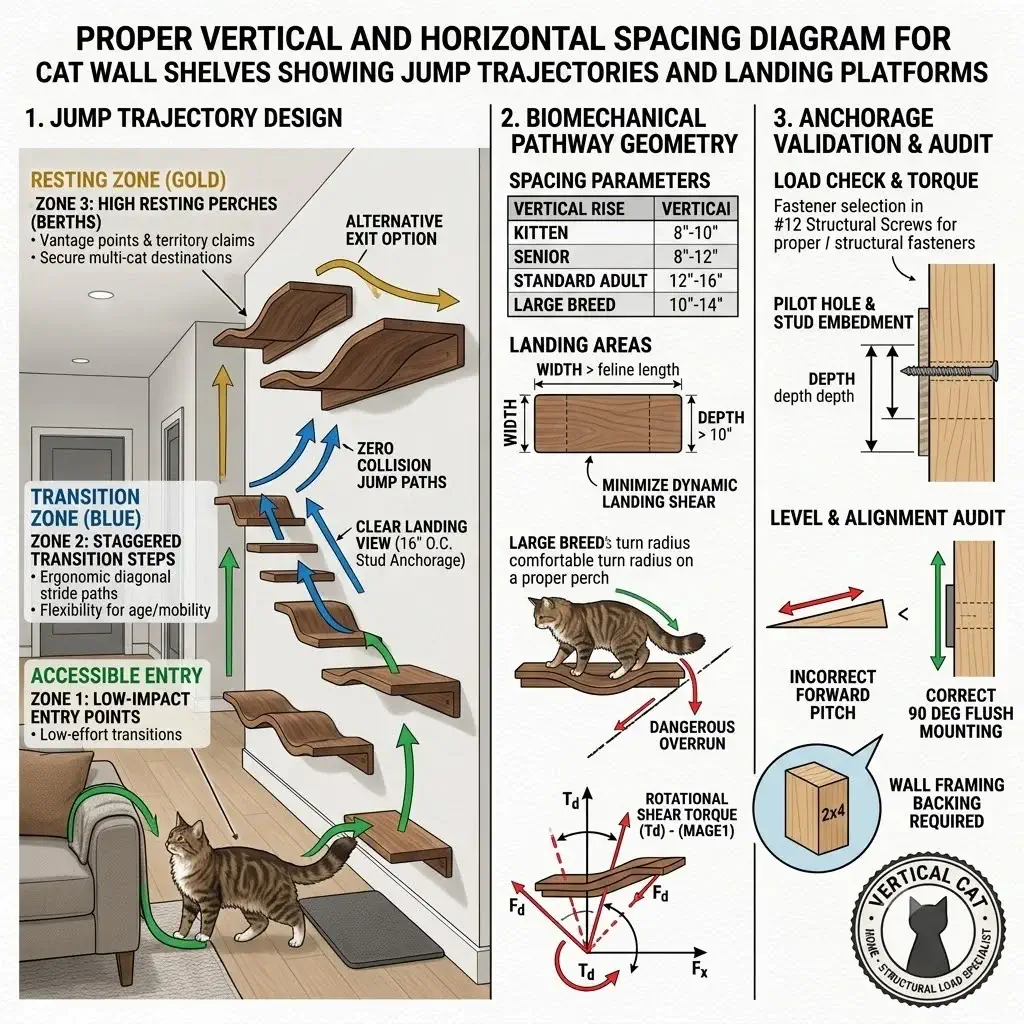
| Cat Demographic Profile | Optimal Vertical Rise | Horizontal Offset Gap | Min. Usable Deck Depth | Biomechanical Advantage |
|---|---|---|---|---|
| Standard Adult Cats (8–12 lbs) | 12 to 16 inches | 12 to 16 inches | 9.0 to 10.5 inches | Promotes healthy cardiovascular bounding without joint fatigue |
| Large Breeds (Maine Coon, Ragdoll, 15–25 lbs) | 10 to 14 inches | 10 to 14 inches | 11.0 to 12.5 inches | Dramatically reduces downward dynamic landing shear on carpal joints |
| Senior Cats (10+ Years) & Arthritic | 8 to 10 inches | 6 to 10 inches | 10.0 to 12.0 inches | Allows easy step-up transitions without requiring concussive leaps |
| Kittens & Growing Juveniles | 8 to 12 inches | 8 to 12 inches | 8.0 to 10.0 inches | Prevents muscle tears while visual depth perception develops |
| Athletic Climbers (Bengal, Abyssinian) | 16 to 20 inches | 14 to 18 inches | 10.0 to 11.5 inches | Satisfies natural predatory bursts; requires wide deceleration berths |
How Far Apart Should Cat Wall Shelves Be?
Cat wall shelves function best when placed 12 to 18 inches apart vertically and 12 to 16 inches apart horizontally for healthy adult domestic felines. This proven spacing range creates a comfortable climbing incline that cats can navigate hundreds of times a month without hesitating or suffering repetitive joint strain. For kittens, seniors, or cautious pets, vertical rise should drop to 8 to 12 inches to ensure confident movement.
- Standard Adult Baseline: 12 to 16 inches of vertical rise paired with 12 to 16 inches of horizontal shift creates the optimal diagonal stride path.
- Kittens and Seniors: 8 to 12 inches vertically eliminates concussive impact on developing bones or arthritic joints.
- Large Breeds (Maine Coons): 10 to 14 inches vertically paired with deep shelves (11″+) prevents heavy downward impact forces.
- Athletic Climbers: Up to 18 to 20 inches can be used sparingly, but primary highways should remain moderate.
To pair proper stride spacing with reinforced hardware that prevents wall bracket tear-out, review our curated rankings in the best heavy-duty cat wall shelves guide.
Vertical vs. Horizontal Shelf Spacing
Shelf separation encompasses both vertical rise and horizontal offset, which together define the cat’s diagonal jumping vector. Evaluating only the vertical height difference ignores the horizontal leap distance required to reach the next platform:
Vertical Rise (Elevation Gap)
The exact distance measured from the top surface of the lower shelf to the top surface of the upper shelf. Primary standard: 12–16 inches.
Horizontal Offset (Lateral Shift)
The lateral distance measured between the nearest edges of two consecutive platforms. Primary standard: 12–16 inches.
A shelf placed 12 inches higher but shifted 24 inches laterally creates a much longer, more taxing leap than one placed 16 inches directly above. Leading systems like Catastrophic Creations engineer their climbing modules around a balanced 12-to-16-inch horizontal and vertical offset to ensure predictable landings.
Best Cat Wall Shelf Spacing for Adult Cats
Adult domestic cats thrive on a 12-to-16-inch vertical rise that encourages natural bounding without inducing muscular fatigue. When designing a new wall circuit for cats of unknown jumping confidence, starting within this middle band ensures immediate acceptance:
| Vertical Elevation Gap | Climbing Difficulty Rating | Recommended Architectural Use Case |
|---|---|---|
| 8 to 10 inches | Very Low Effort | Senior routes, recuperation zones, and initial ground take-offs |
| 10 to 12 inches | Gentle Incline | Cautious felines, heavier body builds, and compact wall areas |
| 12 to 16 inches | Optimal Standard | Universal default for healthy adult cats; balance of exercise and comfort |
| 16 to 18 inches | Athletic Jump | Agile breeds; requires generous landing platform depths (11″+) |
| Over 20 inches | Strenuous Leap | Avoid as a standard; insert an intermediate stepping rung |
The primary goal of shelf spacing is not testing how high a cat can jump, but creating an inviting route the cat chooses to use dozens of times daily.
How Far Apart Should Cat Shelves Be for Kittens?
Kittens require reduced vertical intervals of 8 to 12 inches to safely accommodate developing coordination, shorter limbs, and growing depth perception. Forcing young kittens to attempt wide adult gaps can lead to slips and lasting fear of high spaces:
- Keep First Transitions Low: The first shelf should sit no more than 8 to 12 inches from the floor or couch.
- Ensure Visible Landings: Avoid high-walled box perches that block a kitten’s line of sight during upward jumps.
- Add Non-Slip Traction: Line every wooden step with secure felt, ribbed carpet, or sisal pads.
- Plan for Expansion: Leave space on your wall to add intermediate rungs as your kitten grows into adult stride lengths.
How Far Apart Should Cat Shelves Be for Senior Cats?
Senior felines suffering from degenerative joint disease require gentle 8-to-10-inch stair-step spacing to maintain vertical mobility without joint pain. Up to 90% of cats over 12 years of age exhibit radiographic signs of arthritis, making concussive landings especially painful:
- Eliminate Jumping Gaps: Space steps tightly so seniors can step upward like climbing stairs rather than leaping.
- Widen Stepping Surfaces: Use platforms at least 10 to 12 inches deep to give older cats confident footing.
- Cushion Landing Surfaces: Add orthopedic memory-foam pads or thick felt to absorb downward shock on front paws.
- Avoid Dead-End Perches: Ensure older cats have a smooth, low-incline descent route back to the floor.
How Far Apart Should Shelves Be for Large Cats?
Large-breed cats require moderate 10-to-14-inch vertical rises paired with expansive platform depths to absorb dynamic landing mass safely. Breeds like Maine Coons, Ragdolls, and Norwegian Forest Cats (15–25+ lbs) generate high downward momentum during descents:
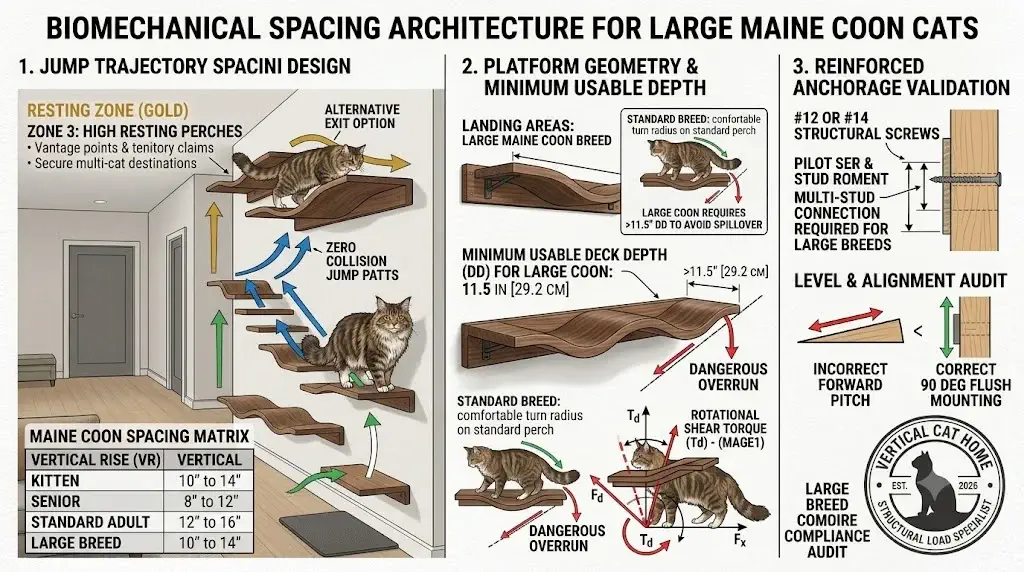
When a 20-pound cat descends from an 18-inch shelf, its front carpal joints absorb over 50 pounds of dynamic force. Tighter vertical spacing combined with deep shelves keeps landing shock manageable and protects heavy felines from joint wear. For complete large-breed platform dimension reviews, check our guide to the best cat wall furniture for large cats.
Why Comfortable Jumping Matters More Than Maximum Jumping
Routine climbing confidence dictates how often a cat uses wall furniture, whereas designing around peak athletic jumping causes hesitation and avoidance. A healthy cat can leap five feet during play, but will avoid an everyday vertical path that requires a maximum-effort jump every time:
Never ask “How far can my cat jump?” Instead, ask “How far will my cat comfortably jump fifty times a week?”
Warning Signs That Shelf Spacing Is Too Wide:
- The cat crouches, hesitates, and looks back and forth before jumping.
- The cat climbs the bottom steps but refuses to access the upper perches.
- The cat bypasses shelves entirely, using nearby chairs or dressers to reach high spots.
- The cat scrambles or barely catches the landing shelf with its rear paws.
Authoritative feline welfare guidelines from the American Association of Feline Practitioners (AAFP) on environmental needs emphasize that environmental enrichment must provide predictable physical security to reduce feline stress.
How Much Horizontal Offset Should Cat Wall Shelves Have?
Horizontal platform separation should measure 12 to 16 inches to allow cats a clear view of the landing surface and create a natural climbing arc. Offsetting shelves laterally prevents platforms from stacking directly on top of each other, which can block the cat’s jumping path:
- Narrow Offset (under 8 inches): The upper shelf overhangs the lower one, forcing the cat to jump outward and squeeze onto the deck.
- Standard Offset (12 to 16 inches): Creates a clean 45-degree diagonal path with an unobstructed landing view.
- Wide Offset (over 20 inches): Turns a simple step into a long horizontal leap that demands higher speed and friction.
Should Cat Wall Shelves Be Staggered?
Staggered diagonal arrangements provide superior climbing ergonomics and landing visibility compared to a straight vertical ladder. Arranging shelves in a gentle zigzag offers several practical advantages:
- Natural Ascending Stride: Cats prefer moving upward along diagonal paths rather than jumping straight up.
- Clear Vertical Landing Zones: Staggering ensures the cat has open headroom above each platform during landing.
- Separates Rest from Transit: Transit steps lead smoothly into large, out-of-the-way loungers.
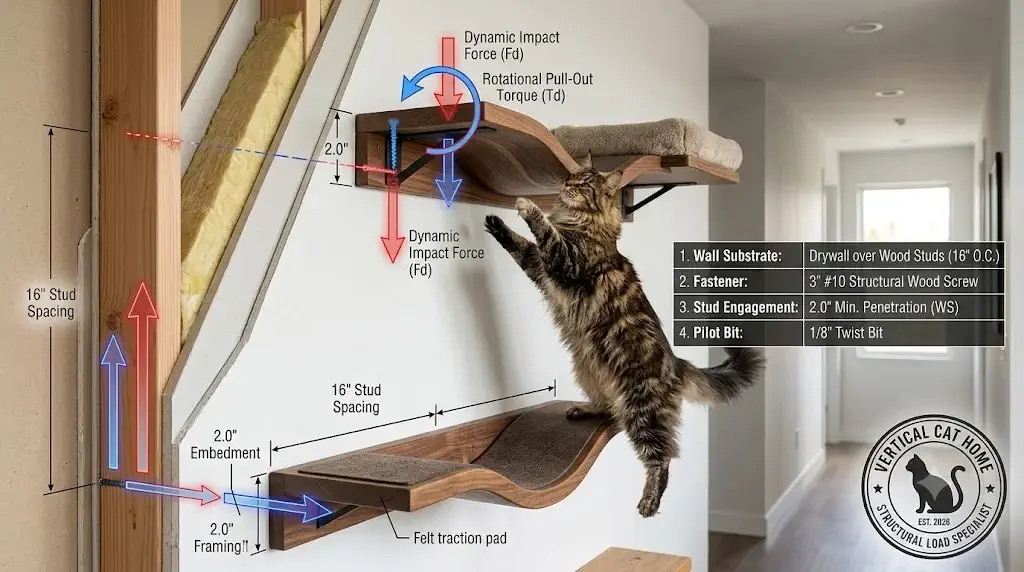
- Better Wall Stud Use: Staggered layouts spread mounting points across multiple 16-inch studs instead of overloading a single stud.
For step-by-step stud locating and leveling instructions, follow our comprehensive guide on how to install cat wall shelves.
How High Should the First Cat Shelf Be?
The lowest entry shelf should sit 12 to 24 inches from the finished floor to provide an easy starting point for your cat. Placing the first shelf too high creates an intimidating initial hurdle that discourages cats from exploring the wall:
- Direct Floor Mount: Keep the first rung 12 to 18 inches high so kittens, seniors, and heavy cats can step up easily.
- Furniture Transition Launch: If placing shelves above a sofa or credenza, position the first shelf 12 to 14 inches above the furniture cushion.
- Floor Traction Pads: Place a small non-slip rug below the first shelf on hardwood or tile floors to prevent slips during take-off.
How High Should the Top Shelf Be?
Top perches should sit 12 to 18 inches below the ceiling to leave comfortable headroom for cats to sit upright and stretch. Placing a high shelf too close to the ceiling prevents cats from standing comfortably, causing them to abandon the perch:
- Measure Upright Cat Height: A large cat sitting upright measures 14 to 18 inches from paws to ear tips.
- Allow Adequate Ceiling Clearance: Maintain at least 15 to 18 inches between the perch and ceiling drywall.
- Verify Human Clearance: Ensure high perches remain accessible so caregivers can easily reach cats during emergencies or for cleaning.
- Provide Two Descent Paths: Never create a high dead-end perch where a cat can become trapped by a housemate.
How Shelf Depth Changes the Ideal Spacing
Platform depth determines the usable landing surface, requiring tighter vertical spacing on narrow shelves to prevent missteps. Spacing and shelf depth work hand-in-hand to ensure secure footing:
- Narrow Stepping Rungs (7 to 8 inches deep): Keep vertical rises under 10 to 12 inches to allow precision landings.
- Medium Transition Shelves (9 to 10.5 inches deep): Accommodate standard 12-to-16-inch vertical jumps safely.
- Deep Lounging Decks (11 to 14 inches deep): Provide ample room for cats to land, turn, and stretch out without falling off.
Landing Area and Clearance Matter Too
Clear space around platforms prevents mid-air collisions with doors, light fixtures, and wall trim during jumps. Even a properly spaced shelf will be avoided if the approach path is obstructed:
- Door Swing Clearance: Keep shelves at least 18 inches away from swinging door paths to avoid startling climbing cats.
- Curtains and Blinds: Maintain clearance from window drapery that cats could snag with their claws.
- Overhead Fixtures: Keep jumping paths clear of hanging pendant lights and ceiling fans.
- Wall Corners: Leave generous side room around wall corners to give cats clear sightlines before jumping.
How Far Apart Should Cat Shelves Be for Multiple Cats?
Multi-cat installations require dual climbing circuits and widened passing bays to prevent territorial standoffs. In homes with two or more cats, a single vertical ladder creates a chokepoint where a dominant cat can trap a timid housemate:
- Dual Ascent Routes: Install two separate stepping paths leading to upper resting berths.
- Passing Runways: Use 10-to-12-inch deep shelves along main highways so cats can pass without friction.
- Multiple Resting Destinations: Place at least two high loungers on opposite sides of the room.
- Tightened Step Spacing: Keep transition steps between 10 and 12 inches apart to allow quick, smooth retreats.
How to Adjust Cat Shelf Spacing After Installation
Observing feline climbing behavior allows caregivers to fine-tune shelf spacing and resolve hesitation points. Watch your cat use the wall during its first two weeks and make adjustments as needed:
- If the Cat Hesitates: Add an intermediate stepping rung to cut a difficult vertical rise in half.
- If the Cat Skips a Shelf: The bypassed shelf may be awkwardly positioned; consider shifting it elsewhere to expand the route.
- If the Cat Stays on Low Shelves: Check for overhead clearance issues or cold ceiling drafts near upper perches.
- If Footing Seems Slippery: Add textured sisal or ribbed carpet pads to give paws better traction during landings.
Common Cat Wall Shelf Spacing Mistakes
Avoiding critical spacing and alignment mistakes prevents cat injuries and ensures your wall shelves get daily use. Steer clear of these common design missteps:
- Designing Around Maximum Leaping Ability: Spacing shelves 24+ inches apart causes hesitation and joint fatigue.
- Stacking Shelves in a Straight Vertical Line: Forces cats into awkward vertical hops with blocked landing views.
- Measuring Only Vertical Rise: Forgetting to account for horizontal offset creates jumps that are too long.
- Mounting the First Shelf Too High: Placing the bottom shelf over 24 inches high discourages kittens and senior cats.
- Creating High-Altitude Dead Ends: Failing to provide a second descent route leads to territorial trapping.
- Ignoring Platform Depth: Using narrow 6-inch steps as high resting perches causes cats to roll off during deep sleep.
A Simple Cat Wall Shelf Spacing Formula
A structured spacing formula balances feline age, stride length, and platform depth to ensure an ergonomic layout. Use this planning sequence before making permanent wall holes:
- Weigh your cat and evaluate its age, mobility, and jumping confidence.
- Outline shelf footprints on drywall using painter’s tape based on a 12-to-16-inch vertical rise.
- Maintain 12 to 16 inches of horizontal shift to create a diagonal climbing angle.
- Confirm that primary resting perches offer at least 11 inches of usable depth.
- Use a laser or torpedo level to verify horizontal alignment before drilling pilot holes into wall studs.
For guidance on calculating dynamic impact forces and bracket load ratings, review our heavy-duty cat wall furniture buying guide.
Spacing Should Be Based on the Actual Cat, Not Just a Chart
Individual feline body dimensions and confidence dictate ideal shelf intervals far better than generic online spacing charts. A lean, long-limbed 12-pound Siamese moves very differently from a stocky, heavy-boned 16-pound British Shorthair. Always tailor shelf spacing to your cat’s unique stride length and physical comfort.
VerticalCatHome Spacing Standard
VerticalCatHome benchmarks vertical shelf layouts on feline biomechanics, carpal joint deceleration, and repeatable jumping confidence. We evaluate every wall installation using this core formula:
By designing for your cat’s everyday comfort rather than its peak athletic ability, you create an inviting vertical territory that keeps your cats active, confident, and safe for years to come.
Frequently Asked Questions (FAQ)
How far apart should cat wall shelves be?
For healthy adult cats, space shelves 12 to 18 inches apart vertically and 12 to 16 inches apart horizontally. Kittens, seniors, and large breeds benefit from reduced vertical rises of 8 to 12 inches to minimize joint impact.
Is 12 inches too close for cat wall shelves?
No, 12 inches is an excellent spacing interval. It provides a comfortable, low-impact stride for adult cats and is ideal for kittens, senior cats, or cautious climbers.
Can cat wall shelves be 24 inches apart?
While young athletic cats can clear a 24-inch jump, it should not be used as standard spacing across an entire wall. Jumping that distance repeatedly can strain joints; adding an intermediate step creates a much more comfortable route.
Should cat wall shelves be staggered?
Yes, staggering shelves in a diagonal zigzag creates a more natural climbing path, provides a clear view of landing platforms, and allows weight to be distributed across multiple framing studs.
How far apart should shelves be for large cats like Maine Coons?
For large cats weighing 15 to 25 pounds, keep vertical spacing between 10 and 14 inches and choose platforms at least 11 to 12 inches deep to absorb heavy landing forces and prevent edge spillover.
How high should the first cat shelf be mounted?
The first shelf should be mounted 12 to 24 inches from the floor, or 12 to 14 inches above a nearby sofa or credenza, to provide an easy, confident entry point onto the wall.
