
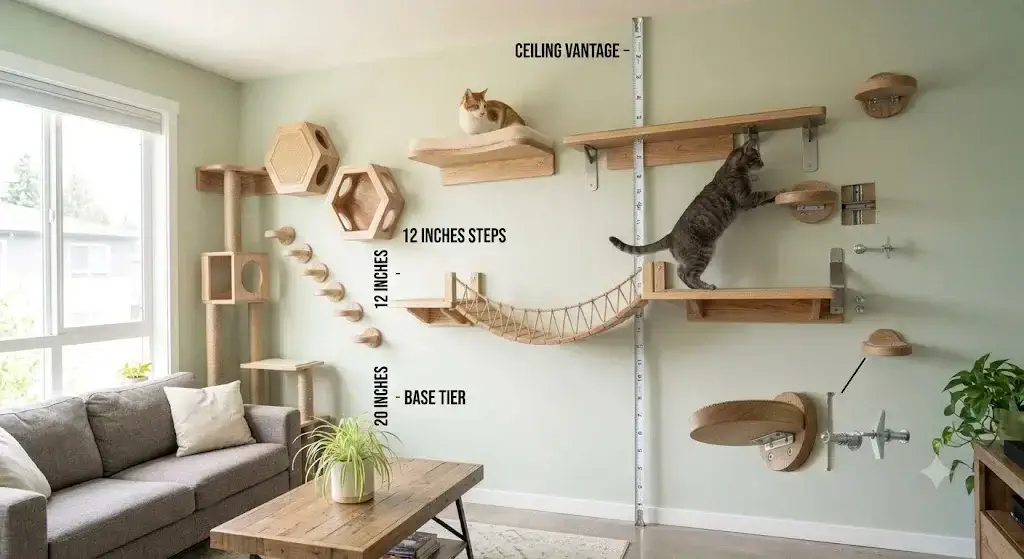
How to Train a Cat to Use Wall Shelves: Step-by-Step Acclimation
Training a cat to use wall shelves relies on progressive food-lure desensitization, facial scent transfer, and positive reinforcement to build vertical climbing confidence. While natural feline instincts favor high perches, unfamiliar shelf materials, sudden visual heights, or slick wooden treads can trigger freezing responses in timid felines. By systematically guiding cats through low-elevation baseline steps before introducing high overhead runways, owners eliminate acrophobic hesitation and encourage self-motivated vertical exploration without forced handling.
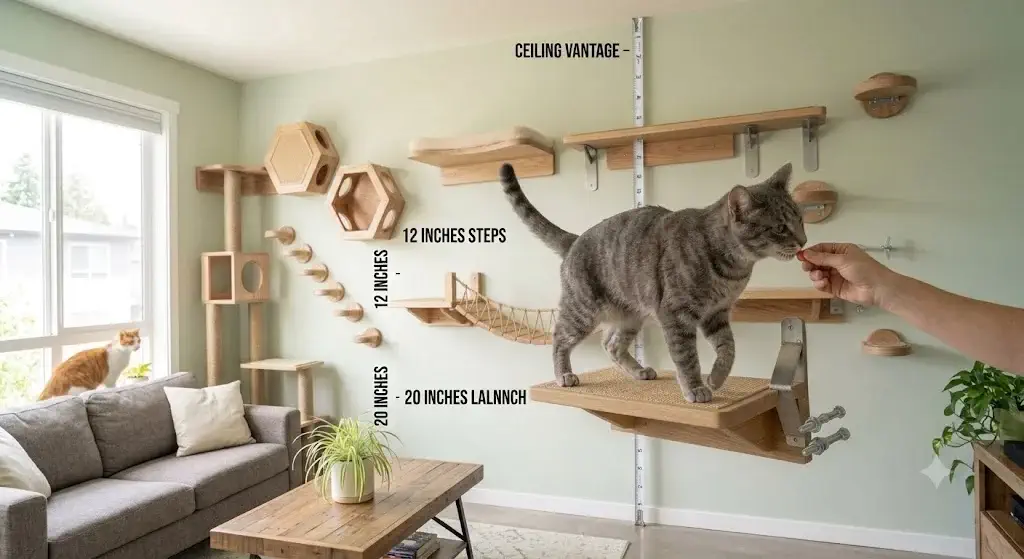
Quick Reference Specification: Feline Vertical Acclimation Protocol
| Training Phase | Duration / Timeline | Sensory & Behavioral Tool | Target Elevation Milestone | Completion Indicator |
|---|---|---|---|---|
| Phase 1: Olfactory Neutralization | Days 1 to 3 | Facial scent rub cloth, catnip spray, Feliway | Ground / Unmounted Hardware | Cat rubs cheeks against wood without tail flicking |
| Phase 2: Base Launch Onboarding | Days 4 to 7 | High-value treats (freeze-dried salmon/chicken) | 18″ to 24″ (Launch Tier) | Voluntary stepping from sofa or floor onto first step |
| Phase 3: Highway Ascent Luring | Days 8 to 14 | Target stick, wand toy, lickable puree treats | 36″ to 60″ (Mid Transit Zone) | Continuous climbing without hesitation or vocalization |
| Phase 4: Penthouse Habituation | Days 15 to 21 | Heated plush pads, meal feeding on high perches | 72″+ (Observation Penthouse) | Unprovoked lounging, self-grooming, and sleeping aloft |
Quick Answer: How Do You Train a Cat to Use Wall Shelves?
Training a cat to use wall shelves requires a zero-force acclimation sequence using high-value food treats, scent transfer, and interactive play along lowest stepping tiers. Never pick up and force a cat directly onto an elevated wall shelf, as forced placement induces panic, causes emergency floor leaps that strain carpal joints, and creates negative territory associations. Instead, place freeze-dried meat treats on the lowest 18-to-24-inch shelf, guide movement with a feather teaser wand, and reward voluntary forward paw steps until the cat climbs the entire overhead highway autonomously.
- Rule #1 (No Forced Lifting): Allowing the cat to navigate height at their own pace establishes control and prevents trauma.
- Rule #2 (Scent Familiarization): Rub a cloth on your cat’s cheeks and wipe it over new wood and sisal treads to deposit calming pheromones.
- Rule #3 (Traction Guarantee): Line bare timber treads with dense non-slip felt or sisal rope to eliminate paw slippage fear.
- Rule #4 (Incremental Luring): Place treats one step higher each day rather than expecting immediate ascension to 7-foot perches.
For precise elevation guidelines that prevent fear-inducing jump gaps, review our standard on how high cat wall shelves should be.
Forced Handling Triggers Severe Fight-or-Flight Responses on Elevated Ledges
Physically lifting and depositing a cat onto high wall furniture generates intense spatial disorientation and defensive panic. When human hands force an animal into an unfamiliar 6-foot vertical elevation without allowing them to map escape routes, the cat perceives the shelf as an inescapable trap rather than a secure vantage point:
Loss of Proprioceptive Agency
Felines rely on muscle memory and visual distance mapping during ascent; manual lifting bypasses sensory calibration, triggering immediate panic-induced leaps.
Negative Spatial Association
A single traumatic episode of slipping or scrambling to escape an elevated shelf will cause cats to boycott the wall installation for months.
Dead-End Bottleneck Anxiety
Shelves without connected return exits increase fear; ensure your setup utilizes continuous pathways as outlined in our guide on how to create a cat wall highway.
Systematic Acclimation Protocol Transforms Hesitant Cats into Confident Climbers
Structured operant conditioning breaks down vertical ascension into four manageable confidence-building stages. Follow this daily training sequence to safely guide your feline up their wall system:
Stage 1: Pheromone Scent Deposition and Olfactory Priming
Before mounting or immediately after installation, rub a clean microfiber cloth around your cat’s temporal and perioral scent glands (located on the cheeks between the eyes and ears). Wipe this cloth vigorously over the wooden platform corners and sisal rope coverings. Depositing the cat’s natural F3 facial pheromone fraction identifies the foreign wood and bracket hardware as safe home territory.
Stage 2: Low-Tier Food Luring on Launching Steps
Place a high-value treat (such as freeze-dried minnows, chicken liver, or a squeeze of churu puree) on the lowest launch step (18 to 24 inches above the floor). Allow the cat to discover the treat independently. Once the cat places both front paws on the shelf to eat, place the next treat fully onto the platform surface so the cat steps up with all four paws.
To select stable starter steps with secure grip surfaces, browse our rankings of the best cat wall steps.
Stage 3: Interactive Prey Wand Guidance Along Mid-Levels
Activate your cat’s predatory play drive using a lightweight feather wand or ribbon teaser. Drag the wand lure slowly along the mid-tier climbing ledges (36 to 50 inches), allowing the feather to flutter over step edges. Predatory focus overrides mild height hesitation, encouraging agile leaps. Always reward a successful ascent with treat reinforcement and vocal praise.
Stage 4: Establishing High-Value Penthouse Resting Rewards
Transform the top observation shelf (66 to 84 inches high) into the ultimate luxury zone. Install a soft faux-fleece pad or self-warming thermal mat on the main perch. Feed your cat their regular daily wet meal or favorite high-reward snack exclusively on this top shelf for three consecutive days to cement the top tier as their primary resting sanctuary.
Find premium wide resting platforms in our master evaluation of the best cat wall shelves.
Solving Physical Traction Deficits Eliminates Feline Hesitation and Freezing
Physical modifications to shelf surfaces frequently resolve persistent climbing refusal when behavioral training plateaus. When a cat refuses to ascend beyond the first step, evaluate these common mechanical hurdles:
| Observed Hesitation Symptom | Root Cause Diagnosis | Corrective Engineering Fix |
|---|---|---|
| Paws slide or claws clatter loudly | Slick varnished wood lacks frictional traction | Attach adhesive ribbed carpet pads or wrap ledges in 6mm sisal rope |
| Step flexes or wobbles during launch | Loose bracket screws or hollow drywall anchor flex | Tighten lag bolts into framing studs or upgrade to steel Snaptoggles |
| Cat reaches up but refuses to leap | Vertical step rise exceeds cat’s comfortable stride (>14″) | Install an intermediate stepping peg to reduce vertical rise to 8–10″ |
| Cat refuses to cross suspension bridge | Excessive suspension sway causes balance insecurity | Clamp a temporary rigid plywood splint under bridge rungs for 2 weeks |
Frequently Asked Questions About Training Cats to Use Wall Shelves
How long does it take for a cat to get used to wall shelves?
Confident young cats typically explore wall shelves within 24 to 48 hours. Timid, anxious, or older cats require approximately 7 to 21 days of gradual positive reinforcement before using overhead runways autonomously.
What should I do if my cat is terrified of heights?
Never rush an acrophobic cat. Lower the overall shelf system so steps rise only 6 to 8 inches above floor level, position the launching shelves right next to familiar sofa cushions, and reward every calm sniff with high-value treats.
Can you train senior cats or kittens to use wall shelves?
Yes, provided the spacing matches their mobility. Kittens under 4 months and seniors over 10 years need shallow step rises (under 8 inches), wide platform landings, and continuous non-slip carpeting to prevent accidental slipping.
Does catnip help cats use wall climbing shelves?
Catnip or silvervine spray can attract interested cats to investigate lower steps. However, avoid placing loose dry catnip on high shelves, as hyperactive rolling or sudden disorientation can cause a cat to tumble off narrow ledges.
