
Cat Wall Shelves Without Studs: Hollow Drywall Anchor Guide
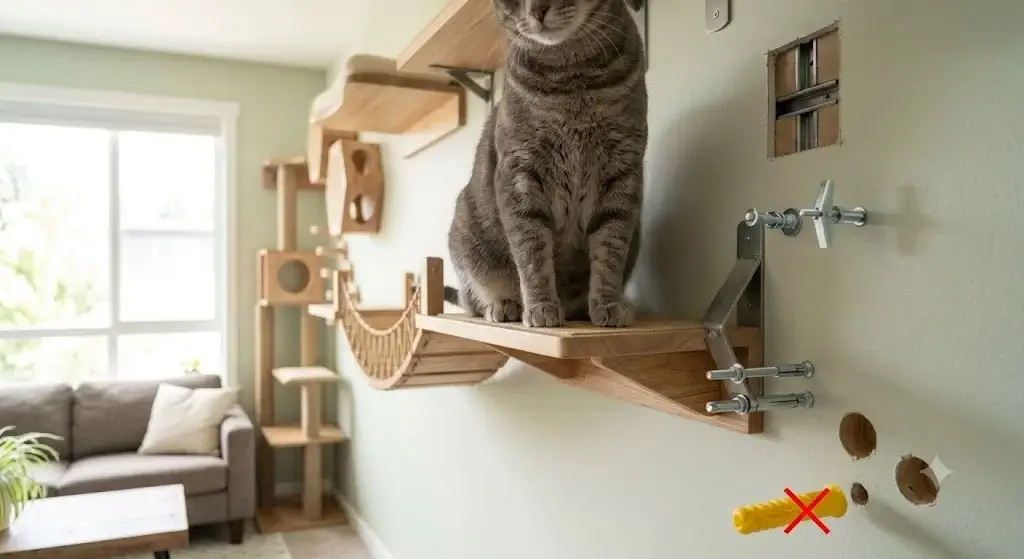
Installing cat wall shelves without studs requires heavy-duty steel toggle anchors or architectural ledger backboards to prevent catastrophic drywall blowouts. While standard plastic drywall plugs hold static picture frames, a 12-pound feline launching downward exerts rotational cantilever torque exceeding 45 pounds of force at the top anchor screw. By deploying 3/16-inch or 1/4-inch steel channel toggles that clamp flat behind 1/2-inch gypsum drywall, pet owners can establish structural holding capacities that safely support active feline landings without framing studs.
Quick Reference Specification: Non-Stud Hollow Drywall Fastener Comparison
| Hardware Anchor Type | Drywall Shear Rating (1/2″ Sheet) | Tensile Pullout Margin | Dynamic Feline Suitability | Hole Bore Diameter | Primary Failure Mode |
|---|---|---|---|---|---|
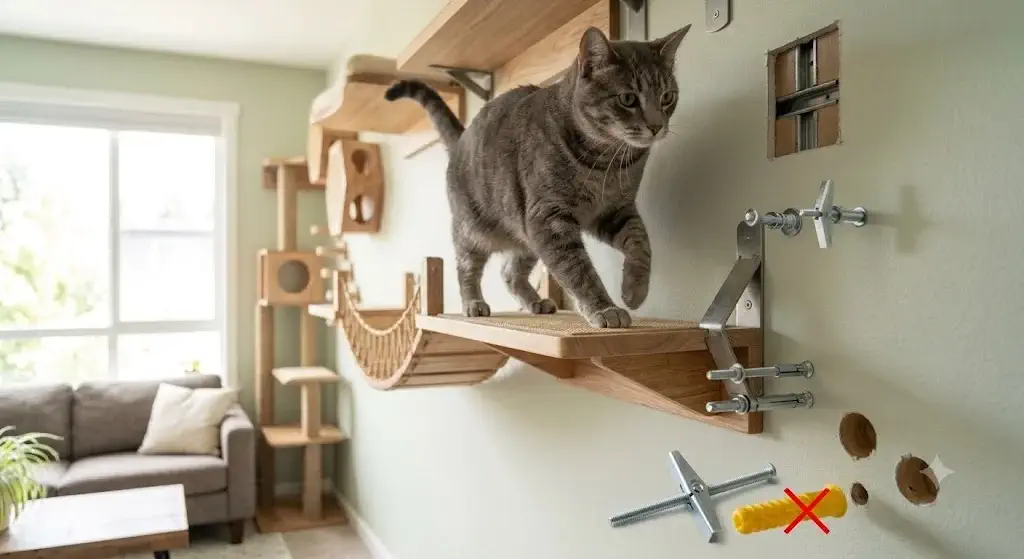
| Steel Channel Toggle (Snaptoggle) | 265 lbs (Ultimate) / 65 lbs (Safe) | 125 lbs (Static) | Recommended (Adult Cats up to 16 lbs) | 1/2 Inch (13 mm) | Gypsum core shear failure around channel plate |
| Spring-Wing Toggle Bolt (Classic) | 150 lbs (Ultimate) / 40 lbs (Safe) | 85 lbs (Static) | Moderate (Single light cats under 11 lbs) | 5/8 Inch (16 mm) | Spring wing collapse or bolt looseness over time |
| Zinc Self-Drilling Threaded Anchor | 50 lbs (Static Shear Only) | 15 lbs (Dynamic Drop) | Hazardous (High risk of failure) | No pre-drill (Self-tap) | Crumbles gypsum core under upward torque |
| Plastic Expansion Plug (Included in box) | 20 lbs (Static Picture Load) | 5 lbs (Pullout) | Critical Hazard (Never Use) | 1/4 Inch (6 mm) | Immediate pullout upon dynamic landing leverage |
| Backing Ledger Board (Spans 2 Studs) | 150+ lbs (Full Structural Bond) | 120+ lbs (Per Shelf) | Superior (Multi-Cat & Heavy Breeds) | 1/8″ Pilot to Wood Studs | Structural screw shear at timber stud face |
Quick Answer: Can You Safely Hang Cat Shelves Without Studs?
Cat wall shelves can be hung safely without studs only if installed using heavy-duty steel channel toggle bolts or an architectural wooden ledger board. Standard plastic ribbed wall plugs provided in commercial cat shelf packages must never be used on hollow drywall, as dynamic feline jumping force multiplies downward rotational torque that rips plastic anchors straight through the gypsum core. For secure non-stud installation, 1/4-inch steel toggle bolts clamp behind the drywall sheet, dispersing dynamic landing shock across a wide surface area to support cats up to 16 pounds.
- The Safe Hardware Standard: Use 3/16-inch or 1/4-inch Toggler Snaptoggle hollow wall anchors with grade-5 steel machine bolts.
- The Critical Ban: Discard all yellow, blue, or white plastic ribbed drywall plugs that come inside the cat shelf box.
- Weight & Size Limitations: Direct hollow drywall toggle mounting is safe for cats up to 15–16 lbs on short-depth shelves (under 10 inches deep).
- Heavy Breed Workaround: For Maine Coons over 16 lbs or multi-cat highways, mount an attractive 1×6 hardwood ledger board across two distant studs, then fasten the shelves anywhere along the board.
For pure structural load analysis across all wall profiles, explore our definitive guide on cat wall furniture weight capacity.
Cantilever Landing Forces Multiply Feline Weight into Extreme Pullout Torque
Cantilevered cat shelves convert downward vertical weight into outward horizontal tension against top wall fasteners. When an athletic cat lands on the front edge of a 10-to-12-inch deep wall perch, the shelf acts as a Class 1 lever. The bottom edge of the mounting bracket presses inward against the drywall as a fulcrum, while the top screw experiences direct horizontal pullout force:
Dynamic Impact Multiplication
A 12-lb cat bounding downward from an elevated bridge exerts a 3.0x to 4.5x dynamic shock load, generating over 45 lbs of momentary downward force.
Top Fastener Pullout Tension
Because the top bracket screw is positioned only 2 to 3 inches above the fulcrum, outward rotational tension on the top screw reaches 2.5 times the cat’s physical weight.
Gypsum Core Degradation
Standard gypsum drywall lacks structural grain; repeated dynamic micro-vibrations pulverize the drywall core around ribbed plastic anchors until failure occurs.
Heavy-Duty Steel Toggle Bolts Distribute Shear Stress Behind Drywall
Steel toggle anchors provide mechanical clamping strength that far exceeds the failure threshold of commercial wall anchors. When structural wall studs are unavailable at your desired installation coordinates, deploy one of these two proven mechanical solutions:
1. Toggler Snaptoggle Heavy-Duty 1/4-20 Hollow Wall Anchors
Technical Specs: Anchor Material: Zinc-Plated Solid Steel Channel Bar | Bolt Size: 1/4″-20 Threaded Steel Machine Screws | Drywall Grip: 3/8″ to 3-5/8″ Hollow Cavities | Safe Working Load: 65 lbs per anchor (ASTM Shear Verified)
The Snaptoggle system represents the gold standard in non-stud drywall fastening. Unlike traditional spring-wings that drop into the wall cavity if unscrewed, the Snaptoggle features rigid plastic guidance legs and a sliding ratcheting collar that permanently locks a solid steel channel flush against the rear face of the drywall. When the 1/4-inch machine bolt is driven through the cat shelf bracket, it clamps the drywall securely between the bracket face and the rear steel channel, spreading dynamic landing shock over several square inches.
- Pros: Solid steel bar eliminates anchor pullout; bolts can be removed and re-fastened without losing the anchor; small 1/2-inch drill hole; holds up to 65 lbs safe working load in 1/2″ drywall.
- Cons: Requires a clean 1/2-inch drill bit and a clear 1.8-inch hollow wall cavity behind the drywall sheet.
2. Heavy-Duty Steel Spring-Wing Toggle Bolts (3/16″ or 1/4″)
Technical Specs: Material: Carbon Steel with Spring-Loaded Wings | Bolt Length: 3.0 Inches | Safe Working Load: 40 lbs per anchor in 1/2″ Drywall
Classic spring-wing toggle bolts utilize two spring-loaded steel wings that fold flat to push through a pre-drilled drywall hole, then snap open inside the hollow wall cavity. As the screw is tightened, the wings pull tight against the back of the gypsum board. While effective at bearing downward shear, spring toggles require threading through the shelf bracket before inserting into the wall, and the wings drop into the wall cavity if the bolt is ever backed out.
- Pros: Readily available in local hardware stores; proven mechanical clamping action; high ultimate tensile strength.
- Cons: Requires drilling a wider 5/8-inch hole; wings fall behind drywall if unbolted; difficult one-person installation.
Backing Ledger Boards Anchor into Studs While Freeing Shelf Placement
A solid wood backing ledger board spans structural studs to provide unlimited non-stud mounting points. For pet parents dealing with irregular stud layouts (or heavy breeds like Maine Coons weighing over 18 lbs), direct drywall toggle mounting may exceed safe margins. Installing a mounting backer board completely resolves this problem:
| Mounting Architecture | Structural Attachment | Dynamic Shock Capacity | Rental Drywall Impact |
|---|---|---|---|
| Direct Hollow Drywall Toggles | Clamped directly to 1/2″ gypsum drywall sheet | Max 15–16 lb single cat leaps | 1/2″ diameter holes per bracket screw |
| Hardwood Ledger Board System | Anchored directly to two 2×4 framing studs | Unlimited (Supports 100+ lbs multi-cat) | Small 1/8″ screw holes into timber studs |
To build a backing ledger board system:
- Select a straight, kiln-dried 1×6 or 1×8 solid pine or oak board that spans at least 34 inches (spanning across two standard 16-inch stud bays).
- Sand and stain or paint the board to match your wall color or furniture trim.
- Fasten the ledger board directly into two wood studs using four 3.0-inch #10 structural wood screws.
- Mount your cat shelves, steps, or bridges anywhere along the face of the hardwood board using standard 1.25-inch wood screws, bypassing drywall anchoring altogether.
To choose solid wood platforms ideal for ledger installations, review our guide on the best cat wall shelves.
Installing Snaptoggle Drywall Anchors Follows Five Precision Steps
Precise hole drilling ensures the metal channel plate seats flat against the back of the drywall. Follow these five steps to install cat wall shelves without studs using Toggler Snaptoggles:
- Position and Level Bracket Holes: Hold the shelf mounting bracket at your target elevation, verify levelness using a 12-inch bubble level, and mark screw centers with a pencil.
- Bore a 1/2-Inch Clearance Hole: Drill directly through the drywall marks using a 1/2-inch brad-point or spade drill bit at moderate speed to avoid tearing the back paper liner.
- Insert the Metal Toggle Channel: Turn the solid metal channel parallel to the plastic straps, push the assembly through the hole into the cavity, and pull the straps taut toward you until the metal bar rests flat against the rear wall face.
- Slide and Snap the Flange Cap: Slide the plastic ratchet collar down the straps until it sits firmly flush with the front drywall surface. Snap the excess plastic straps off flush with the wall by bending them outward.
- Drive the 1/4-20 Machine Bolt: Align your shelf bracket holes over the collar openings and drive the included 1/4″-20 threaded steel bolts with a manual screwdriver until snug. Do not over-torque with an impact driver to avoid crushing the gypsum core.
For stud-based installation procedures and electronic stud scanning techniques, read our manual on how to install cat wall shelves.
Non-Stud Drywall Mounting Mandates Four Structural Constraints
Hollow drywall installations operate within strict physical safety margins that cannot be ignored. Observe these four engineering rules whenever mounting cat wall furniture without studs:
- Restrict Shelf Depth to Under 10 Inches: Longer cantilever depths increase rotational torque exponentially. Shelves deeper than 10 inches should always be anchored to wooden framing studs.
- Never Install Long Suspension Bridges into Drywall Alone: Bridges exert severe inward horizontal tension that pulls end drywall anchors sideways; bridges require stud anchoring. Review safe bridging in our guide on the best cat wall bridges.
- Avoid Vertical Jumping Drop Corridors Exceeding 24 Inches: Limit high downward leaps directly onto drywall-anchored shelves; use staggered pegs to absorb kinetic landing energy. Explore options in our review of the best cat wall steps.
- Enforce a 16-Pound Strict Feline Weight Limit: Heavy breeds (Maine Coons, Norwegian Forest Cats) exceeding 16 lbs generate landing spikes that surpass 1/2-inch gypsum board limits. Use backing ledger boards for large breeds.
Frequently Asked Questions About Cat Wall Shelves Without Studs
Can I use self-drilling screw-in zinc anchors for cat shelves?
No, self-drilling zinc threaded anchors (often rated for 50 lbs static) should never be used for cat furniture. They hold only in brittle gypsum powder; the dynamic upward-and-downward vibrations of a cat jumping quickly pulverize the drywall threads, causing the anchor to rip out unexpectedly.
How do I know if my wall is hollow drywall or plaster?
Tap firmly on the wall: hollow drywall produces an echoey, hollow sound, whereas solid wood or brick produces a dull, solid thud. When drilling a test pilot hole, modern drywall yields white gypsum dust at a depth of 1/2 inch; older lath-and-plaster walls produce gritty grey debris and feel significantly harder to penetrate.
Will cat shelves with toggle bolts damage apartment drywall upon move-out?
Toggler Snaptoggles require a clean 1/2-inch round hole. When vacating a rental property, remove the bolt (the steel channel drops harmlessly inside the hollow wall), press a small dab of drywall mesh or backing paper into the hole, fill with standard spackle paste, sand smooth, and touch up with wall paint to restore the wall completely.
How many toggle bolts should I use per cat shelf bracket?
Use a minimum of two 1/4-inch toggle bolts per mounting bracket (four toggles total for a standard dual-bracket shelf). Ensure the top fastener holes receive the heaviest toggles, as the top position absorbs over 75% of total cantilever pullout tension.
