
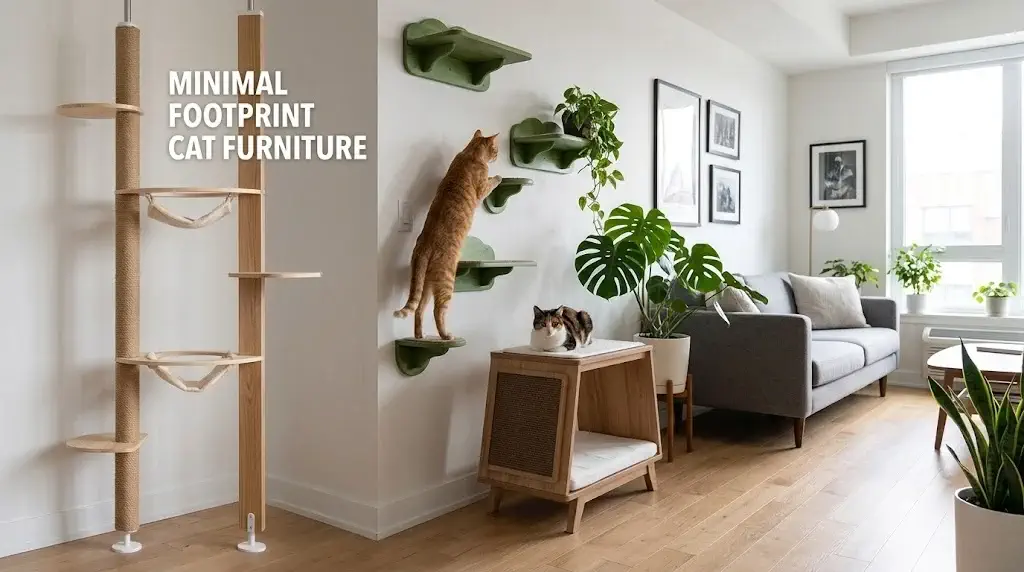
Best Cat Furniture With Minimal Floor Footprint (2026)
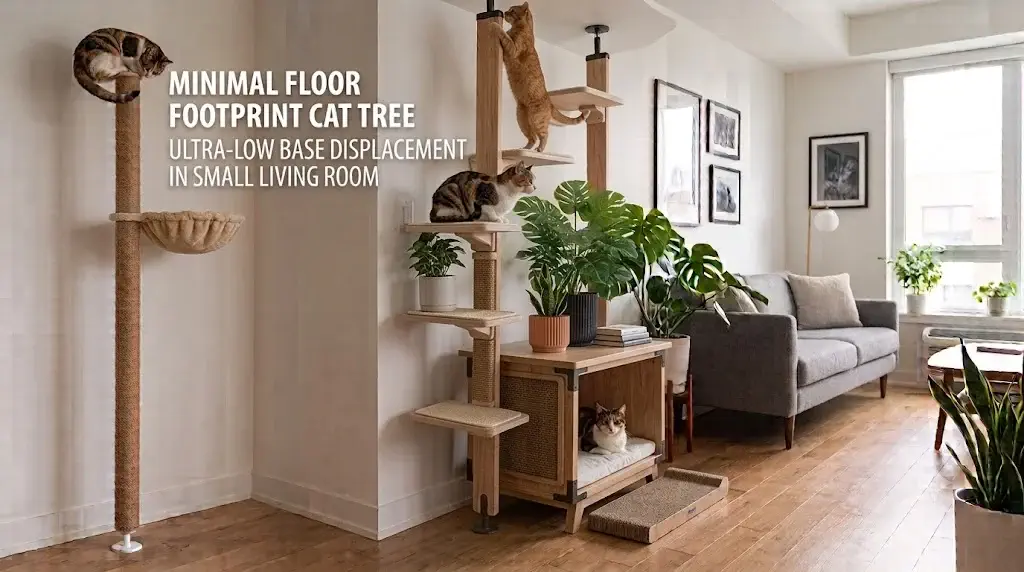
The best cat furniture with minimal floor footprint occupies two square feet or less of floor surface while delivering vertical resting, scratching, and climbing territory without wall drilling. Unlike oversized traditional carpeted towers that consume up to six square feet of living space, ultra-compact freestanding furniture uses weighted cast-iron baseplates, dual-purpose human end-table frames, vertical tension poles, and dense multi-level towers to maintain mechanical stability. Evaluating compact cat furniture requires auditing actual ground-contact dimensions, physical center-of-gravity placement, and dynamic anti-toppling resistance across residential living lanes.
| Model / Category Focus | Base Dimensions (W × D) | Ground Footprint (sq ft) | Total Vertical Height | Chassis Stabilization Mechanism | Optimal Placement Boundary |
|---|---|---|---|---|---|
| Ahomdoo 34″ Scratching Post | 15.7″ × 15.7″ | 1.71 sq ft | 34.0 inches | Wide square weighted timber baseplate | Doorway perimeters & tight corners |
| Lifewit Hidden Plant Enclosure | 19.7″ × 19.7″ (Round) | 2.11 sq ft (Zero net) | 35.4 inches | Low center of gravity with litter ballast | Living room decor & bedroom corners |
| Heybly 56″ Multi-Level Tower | 18.9″ × 18.9″ | 2.48 sq ft | 56.0 inches | Battlement base with anti-tip strap | Unused living room alcoves |
| MewJoyee Tension Cat Pole | 15.7″ × 9.8″ | 1.07 sq ft | 90.0 – 108.0 inches | Ceiling compression spring mechanism | Ultra-narrow vertical corridor spaces |
| Catit Vesper High Base Oak | 22.0″ × 22.0″ | 3.36 sq ft | 32.0 inches | Dense laminated oak composite core | Modern open-concept living rooms |
Quick Answer: What Cat Furniture Has the Smallest Floor Footprint?
The MewJoyee Floor-to-Ceiling Tension Cat Pole provides the smallest physical floor footprint among climbing furniture, requiring only 1.07 square feet of base area while ascending up to nine feet overhead. Because it relies on vertical ceiling compression rather than a sprawling weighted timber base, it preserves maximum floor space for apartment dwellers. For compact scratching needs, the Ahomdoo 34-Inch Post confines claw conditioning to 1.71 square feet, while the Lifewit Hidden Plant Enclosure delivers a dual-purpose sanitary shelter that completely camouflages feline utility beneath decorative indoor greenery.
To understand comprehensive room configurations designed for micro-studios and small urban spaces, read our broader layout framework in the best cat furniture for small apartments guide.
| Spatial Constraint | Architectural Category | Physical Footprint Benchmark |
|---|---|---|
| Ultra-Narrow Corridors | Floor-to-Ceiling Tension Pole | 1.07 sq ft (spring-loaded vertical expansion) |
| Dedicated Vertical Scratching | Single Column Heavy Scratch Post | 1.71 sq ft (dense cotton/sisal rope pillar) |
| Multi-Cat Compact Verticality | Stacked Multi-Level Tower | 2.48 sq ft (condo, hammock, and perches) |
| Camouflaged Utility Furniture | Decorative Plant Enclosure | Zero net footprint (replaces room houseplant) |
| Architectural Low-Rise Lounger | Furniture-Grade Wood Cube Tree | 3.36 sq ft (oak laminate with memory foam) |
Best Cat Furniture With Minimal Floor Footprint: Top Compact Selections
Engineering benchmarks prioritize square footage displacement, base ballast density, and vertical tier accessibility. Arranged systematically in ascending order of investment tier, these five verified setups solve distinct vertical territory challenges across modern homes:
1. Ahomdoo 34-Inch Tall Cat Scratching Post — Best Entry-Level Slim Post
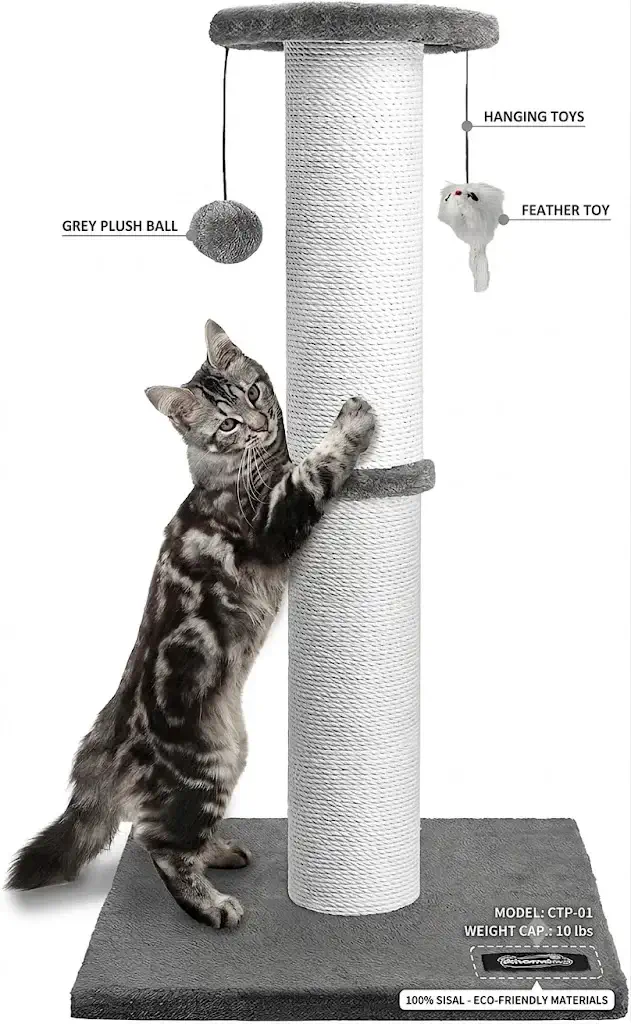
Best for: Large cats needing full spinal stretching within an ultra-narrow 1.71 sq ft base.
The Ahomdoo 34-Inch Scratching Post maximizes functional claw conditioning while keeping ground displacement to a modest 15.7 × 15.7 inches. Engineered with an extra-thick vertical cylinder wrapped in heavy-duty natural cotton rope, it allows adult felines to execute complete vertical stretches without paw snagging. The weighted baseplate keeps the post anchored against horizontal shear forces, making it ideal for tight apartment corridors and bedside perimeters.
- Measured Ground Footprint: 15.7″ Wide × 15.7″ Deep (1.71 sq ft total base area).
- Vertical Dimension: 34.0 inches tall to accommodate full adult feline body extension.
- Friction Core: Wound with tight natural soft cotton fiber rope and interactive teaser toys.
Avoid it if: You need elevated sleeping hammocks or multi-tier climbing platforms.
2. Lifewit Hidden Plant Enclosure — Best Camouflaged Utility Furniture
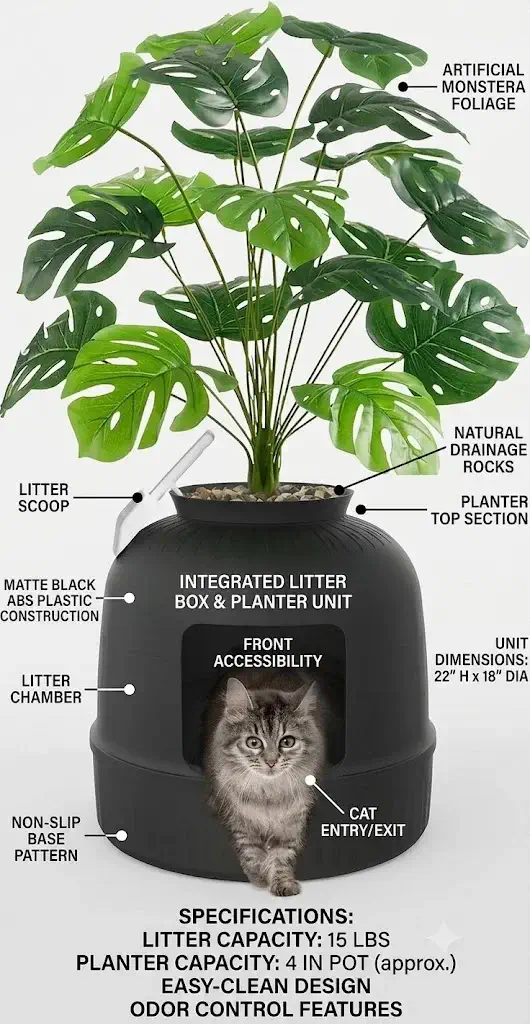
Best for: Studios and open-concept rooms where feline utility doubles as decorative greenery.
The Lifewit Hidden Plant Enclosure achieves zero net floor footprint by replacing a standard decorative houseplant pot with an enclosed feline sanctuary. Disguised as a modern fluted planter complete with lifelike faux monstera foliage, this round unit conceals an expansive lower cavern that functions either as a private nesting condo or a hidden litter box. Because the physical footprint replaces existing human home decor, living room walking pathways remain completely unobstructed.
- Measured Ground Footprint: 19.7″ Diameter circular baseplate (approx. 2.11 sq ft).
- Dual Function: Integrated activated carbon odor control filter with artificial greenery topper.
- Structural Material: Heavy-duty, wipe-clean recycled polymer construction.
Avoid it if: Your primary goal is providing vertical high-altitude jumping perches.
3. Heybly 56″ Multi-Level Cat Tree HCT028G — Best Compact Vertical Tower
Best for: Multi-cat apartments needing resting, scratching, and climbing under 2.5 sq ft.
The Heybly 56″ Multi-Level Tree concentrates multiple vertical tiers onto a streamlined 18.9 × 18.9 inch footprint. Built specifically for climbing activity in tight spaces, it features dual padded observation perches, a hanging plush basket hammock, a private sleeping cave, and sisal-wrapped support posts. The vertical column stacking directs feline energy upward along a single axis, ensuring that the base does not encroach into active living room walkways.
- Measured Ground Footprint: 18.9″ Wide × 18.9″ Deep (2.48 sq ft total base).
- Total Elevation: 56.0 inches tall with staggered easy-climb platforms.
- Anti-Tip Provision: Heavy reinforced base slab complemented by a nylon wall anchor strap.
Avoid it if: You have an ultra-narrow nook unable to accommodate an 18.9-inch square base.
4. MewJoyee Floor-to-Ceiling Cat Tree (90–108″) — Smallest Ground Footprint
Best for: Ultra-compact rooms where maximum vertical climbing must occupy barely one square foot.
The MewJoyee Floor-to-Ceiling Cat Tree achieves the lowest ground displacement in our evaluation group, requiring just 1.07 square feet of floor space. Anchored by a heavy-duty internal compression spring mechanism, the post wedges securely between the floor and ceiling (adjustable from 90 to 108 inches) without screws or wall drilling. Six tiers of sisal-wrapped poles, curved platforms, and a cozy resting hammock allow agile cats to scale ceiling heights while preserving 100% of perimeter floor space.
- Measured Ground Footprint: 15.7″ × 9.8″ ultra-slim baseplate (1.07 sq ft total).
- Vertical Reach: Fully adjustable tension rod spanning 90 to 108 inches in ceiling height.
- Chassis Stabilization: High-tension spring compression keeps the single column rigid.
Avoid it if: Your home features suspended acoustic tile ceilings or ceiling heights exceeding 9 feet.
5. Catit Vesper High Base Cat Tree (Oak) — Best Modern Low-Profile Furniture
Best for: Design-conscious owners who demand furniture-grade materials and zero frame wobble.
The Catit Vesper High Base stands as a benchmark of modern architectural pet furniture, occupying a stable 22 × 22 inch footprint. Crafted from dense oak-laminated wood composite rather than lightweight hollow tubing, the cubic sleeping den and lower platforms anchor the center of gravity low to the floor. Elevated perches feature removable memory foam pads, while extra-long seagrass scratching posts provide satisfying claw resistance that blends naturally into upscale interiors.
- Measured Ground Footprint: 22.0″ Wide × 22.0″ Deep (3.36 sq ft total base area).
- Structural Chassis: Heavy engineered oak laminate with rounded baby-safe corner bevels.
- Ergonomic Comfort: Removable viscoelastic memory foam lounging pads on both tiers.
Avoid it if: You require an ultra-narrow footprint under two square feet.
What Does Minimal Floor Footprint Actually Mean?
Floor footprint measures the physical square footage displaced by a piece of furniture where it meets the ground. This measurement is calculated by multiplying the maximum base width by maximum base depth, including all feet, brackets, and protruding hardware. Many products marketed as “compact” feature small upper perches while hiding bulky four-square-foot baseplates. True minimal-footprint furniture restricts base dimensions to two square feet or less without compromising structural safety.
If your home allows wall mounting and you want to eliminate floor bases entirely, compare dedicated wall platforms in our best wall-mounted cat furniture guide.
Minimal Floor Footprint vs. Space-Saving Cat Furniture
Physical floor footprint and functional space-saving design represent two distinct spatial concepts in feline furniture engineering. While floor footprint evaluates physical base area, space-saving design measures functional density per unit of room volume:
| Engineering Metric | Core Evaluation Question | Architectural Focus |
|---|---|---|
| Minimal Floor Footprint | How many square feet of floor does the base cover? | Physical baseplate area (≤ 2.0 sq ft) |
| Space-Saving Design | How much usable territory does the cat gain per cubic foot? | Multi-functional utility density |
| Vertical Architecture | How high does the structure rise toward the ceiling? | Floor-to-ceiling column extension |
For a complete analysis of all space-saving categories, including over-the-door and hanging models, explore our comprehensive best space-saving cat furniture pillar article.
How to Accurately Measure Cat Furniture Floor Footprint
Measuring floor footprint requires recording the outermost points of ground contact, including leveling feet and overhang clearances. Many owners mistakenly measure only the wooden platform, overlooking stabilizing outriggers or protruding upper baskets that crowd walking paths:
- Measure True Base Dimensions: Record the maximum width and depth across the baseplate corners.
- Calculate Square Footage: Multiply width (inches) by depth (inches) and divide by 144 to establish total square footage.
- Account for Upper Tier Overhang: Check if perches or hammocks extend beyond the base, which can block doors or human walking lanes.
- Audit Surrounding Clearances: Verify at least 24 inches of open clearance around the base so doors and robotic vacuums move without obstruction.
How We Benchmark Minimal-Footprint Cat Furniture
Our testing criteria prioritize stability, functional territory density, and low-profile spatial engineering. Every product undergoes evaluation across five technical metrics:
- Base Area Threshold: Furniture must occupy compact floor surface relative to its vertical utility.
- Center-of-Gravity Placement: Lower platforms must balance upper tiers to prevent toppling during athletic leaps.
- Usable Feline Territory: Platforms must measure at least 11 inches deep to ensure comfortable resting for adult cats.
- Dynamic Cantilever Rigidity: The vertical column must resist loosening or wobbling when subjected to active claw scratching.
- Zero-Damage Renter Usability: Systems must function reliably without requiring permanent wall drilling.
Wall-Mounted Systems vs. Narrow Freestanding Furniture
Wall-mounted furniture eliminates floor contact entirely, whereas freestanding narrow towers offer portability and zero lease violations. Choosing between these formats comes down to drilling permissions, homeownership, and layout flexibility:
| Functional Property | Wall-Mounted Architecture | Narrow Freestanding Towers |
|---|---|---|
| Ground Floor Footprint | 0.0 sq ft (100% elevated) | 1.0 to 2.5 sq ft base area |
| Rental Lease Compliance | Requires drywall hole patching at move-out | 100% compliant (no holes or wall alterations) |
| Relocation Flexibility | Fixed wall installation | Easy to reposition around room furniture |
| Multi-Cat Route Scalability | Unlimited perimeter expansion | Limited to vertical column tiers |
The Renter Advantage: Compact Vertical Living Without Drilling
Renters benefit most from narrow freestanding towers that provide vertical exercise without risking security deposits. When lease agreements prohibit wall anchors, compact towers placed in corners or next to human furniture offer climbing access while staying mobile during apartment moves.
If your compact tower develops minor sway over time, review our structural stabilization techniques in how to stop a cat tree from wobbling.
Small Apartment Strategy: Combining Furniture to Reclaim Living Lanes
Urban apartments require multi-tiered climbing paths that run along room perimeters rather than crowding the center of the floor. Arranging a slim freestanding tower alongside human furniture lets cats move between desks, bookshelves, and sofas without adding extra floor clutter:
- Deploy Tension Rods in Dead Walkway Gaps: Fasten spring-loaded poles like the MewJoyee into narrow clearances between door frames and cabinets.
- Use Human Furniture as Stepping Waypoints: Position compact towers adjacent to sturdy desks or armchairs to create multi-level climbing circuits.
- Replace Standalone Plant Pots: Substitute standard plant stands with dual-purpose litter box planters like the Lifewit to reclaim corner space.
Minimal Footprint Considerations for Large Feline Breeds
Large breeds over 15 pounds generate strong lateral tipping forces when jumping onto narrow freestanding towers. Maine Coons, Ragdolls, and Norwegian Forest Cats require heavy lower bases to offset their kinetic landing energy. When selecting compact furniture for big cats, choose models with weighted base plates or secure the top post using an included anti-tip safety strap.
Multi-Cat Dynamics: Preventing Territorial Bottlenecks on Narrow Bases
Narrow single-column towers can create territorial bottlenecks in multi-cat homes if dominant cats guard the central post. When multiple cats share a small space, using two compact towers placed in different areas works better than crowding one tall tower. This distributes vertical resting zones and avoids territorial disputes.
The 6 Common Mistakes When Buying Small-Footprint Cat Furniture
Avoiding common purchasing errors ensures small-footprint furniture remains stable and comfortable for climbing cats. Be sure to watch out for these six common oversights:
- Prioritizing Short Overall Height Over Small Footprint: Short cat trees often feature wide, cumbersome baseplates that waste valuable floor space.
- Overlooking Upper Tier Platform Overhang: Wide sleeping perches that extend past the base can obstruct nearby human walkways and doorways.
- Ignoring Base Ballast Weight: Narrow towers with lightweight hollow bases can wobble or tip when cats leap off the top tier.
- Selecting Shallow Perches Under 10 Inches: Platforms that are too narrow prevent adult cats from curling up and resting comfortably.
- Skipping Anti-Tip Anchoring: Placing a tall, narrow tower on plush carpet without securing the safety strap introduces unnecessary tip-over risks.
- Cluttering Rooms with Multiple Small Units: Buying several disjointed small scratchers consumes more floor space than one well-planned vertical tower.
Decision Guide: Which Minimal-Footprint Furniture Matches Your Space?
Selecting the right compact furniture depends on your room layout, rental restrictions, and cat’s activity level. Use this decision guide to find the best match for your home:
| Your Household Scenario | Optimal Furniture Category | Recommended Installation Strategy |
|---|---|---|
| Minimalist scratching in tight hallway | Single-Post Scratching Tower (Ahomdoo) | Position flush against door frames to keep paths open. |
| Camouflaging litter or bedding in living room | Hidden Plant Enclosure (Lifewit) | Place in an illuminated room corner as functional decor. |
| Multi-cat climbing in small apartment | 56-Inch Compact Multi-Level (Heybly) | Anchor anti-tip safety strap into nearest timber stud. |
| Narrow studio requiring maximum verticality | Tension Rod Pole Tree (MewJoyee) | Compress firmly against solid ceiling joists without drilling. |
| Modern architectural interior aesthetics | Furniture-Grade Wood Cube (Catit Vesper) | Position beside human seating as a stylish lounge waypoint. |
Final Verdict: Choosing the Right Minimal-Footprint Cat Furniture
The MewJoyee Floor-to-Ceiling Cat Tree stands as the ultimate low-footprint climbing solution, occupying barely one square foot of floor while delivering six tiers of vertical enrichment. For pet parents seeking compact scratching utility, Ahomdoo provides reliable base stability, while the Lifewit Hidden Plant Enclosure seamlessly blends essential feline privacy into everyday home decor.
The best small-footprint cat furniture is not simply the smallest product in the catalog, but the design that balances a compact base with dependable anti-toppling stability and comfortable resting perches for your cat.
Frequently Asked Questions (FAQ)
What freestanding cat furniture has the smallest floor footprint?
Floor-to-ceiling tension poles like the MewJoyee have the smallest freestanding footprints, occupying around 1.07 square feet of floor space. Slim scratching posts such as the Ahomdoo also maintain a minimal base under 1.8 square feet.
How do you measure a cat tree’s physical floor footprint?
Measure the maximum baseplate width and depth in inches, multiply them, and divide by 144 to calculate square footage. Always account for protruding upper perches and stabilizing feet that might extend past the main base.
Are narrow cat trees safe from tipping over?
Narrow cat trees are safe when engineered with heavy lower baseplates, such as dense MDF or solid composite wood, to keep the center of gravity low. For taller towers over 36 inches, using an included anti-tip safety strap eliminates tipping risks.
Can large cat breeds use minimal-footprint cat furniture safely?
Yes, but large breeds over 15 lbs require weighted baseplates or tension-mounted ceiling poles that brace securely against joists to handle their dynamic landing forces safely.
